Below are nine ways to sell a car without a title, from a duplicate at the DMV to a bonded or court-ordered title. Each comes with the fees and rules we checked at state DMVs and in state law, so you can find the cheapest fix for your case.
Key takeaways
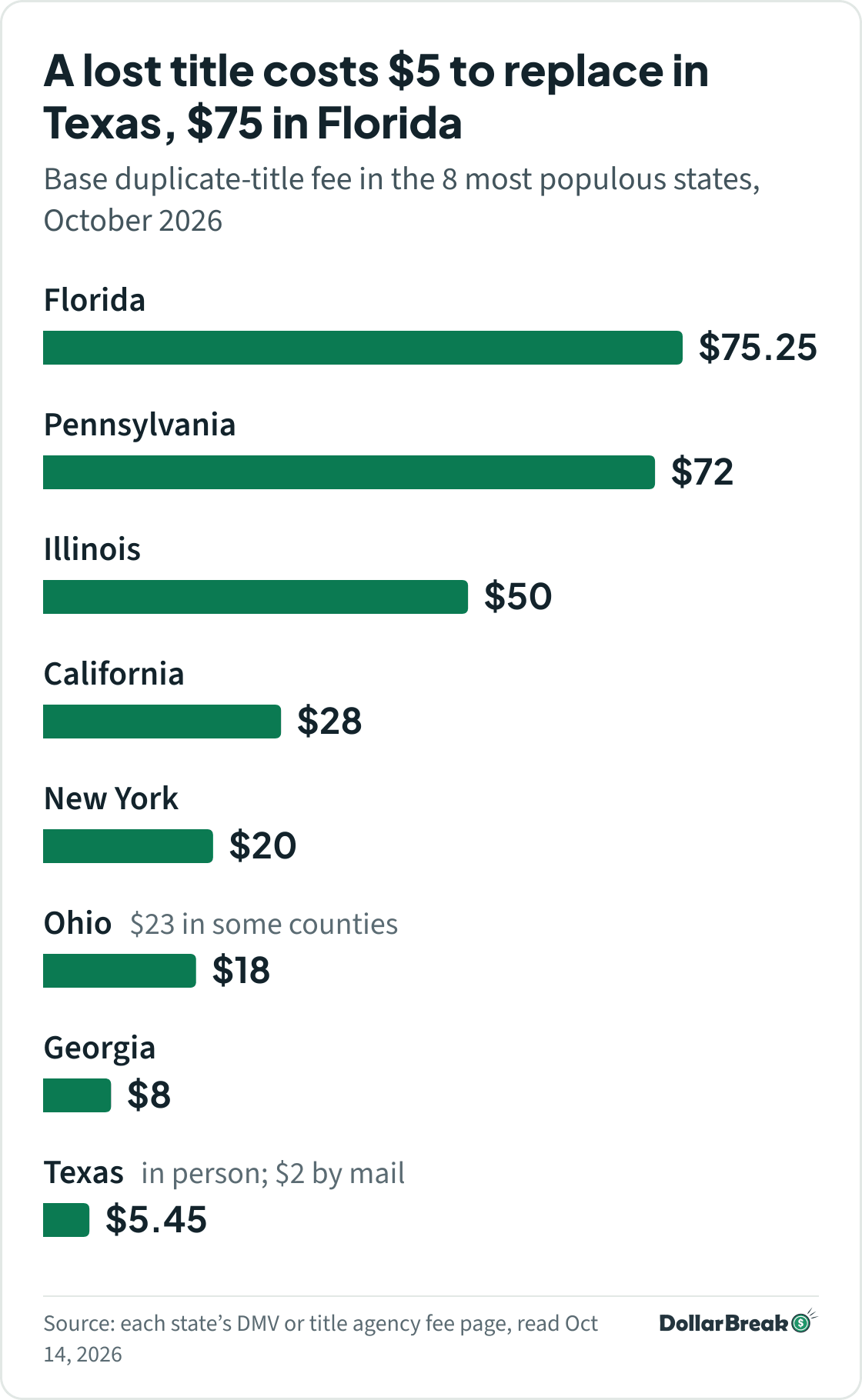
- Duplicate first: if the car is in your name, a replacement title costs $5.45 in Texas to $75.25 in Florida.
- Old cars: some states don't title them at all: New York 1972 and older, Georgia 1962 and older, New Hampshire 1999 and older.
- Bonded title: the bond is 1 to 2 times the car's value, and in Texas and Florida it expires after 3 years.
- Vermont loophole: closed since June 2023 to anyone without a real connection to Vermont.
- Car loan: the lender holds the title until you pay it off; CarMax takes the payoff information instead.
- Scrap: a recycler may buy without a title only under your state's rule; in Texas the car must be at least 13 years old.
Best Used Car Buyers
Peddle

Trustpilot Rating
Get a legit offer in minutes – provide VIN, mileage and condition
$0 fees + you don’t have to pay for towing – Peddle will take care of it
Get paid in check during the pick up for any car (damaged, junk)
Wheelzy

Trustpilot Rating
Quick car evaluation without the hassle – sell your car within 30 min
Choose a convenient date and time for free pick-up, even tomorrow
Get cash in hand the same day the Wheelzy agent picks up your car
CarBrain

Trustpilot Rating
Get an offer within 2 minutes and sell your car within 24 hours
Free vehicle towing and no fees to getting rid of your damaged car
The tow truck driver will arrive with your check (nationwide service)

How to Sell a Car Without a Title?
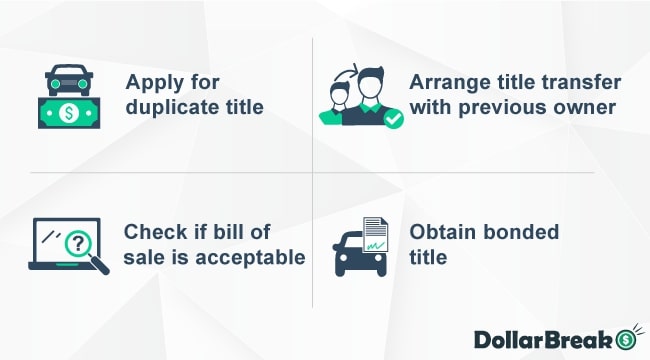
Which route fits depends on why the title is missing:
- Lost, with the car in your name: apply for a duplicate
- Never transferred to you: contact the previous owner
- Gifted or inherited: apply for a title in your name
- An old car your state doesn't title: a bill of sale
- Still paying a loan: pay off the loan
- No paperwork at all: a bonded or court-ordered title
- Headed for scrap: sell it for parts
1. Apply for a Duplicate Title
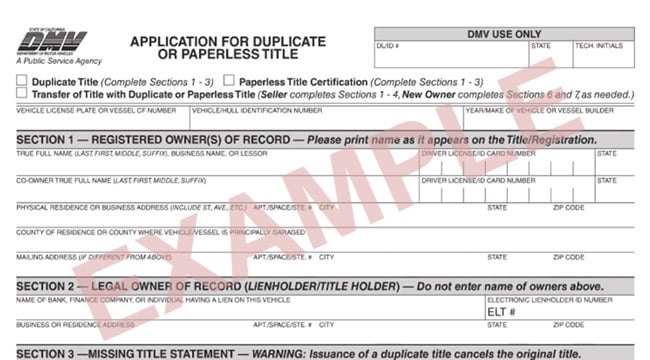
If the title was put in your name and then lost, stolen or damaged, you still own the car. Ask your state DMV for a duplicate, in person, by mail or online where your state offers it.
To apply for a duplicate title:
- Fill in your state's form at a DMV office, online or by mail
- Give your driver's license or ID, the VIN and the license plate number
- Pay the duplicate title fee
The fee depends on the state: $75.25 in Florida, $72 in Pennsylvania, $50 in Illinois, $28 in California, $20 in New York, $18 in Ohio ($23 in some counties), $8 in Georgia and $5.45 in Texas ($2 by mail). Florida mails a paper title in 3 to 4 weeks.
Need it sooner? Florida prints a fast title the same day for $10 more, in person. Illinois expedites one for $30 more and ships it by FedEx.
2. Contact the Previous Owner
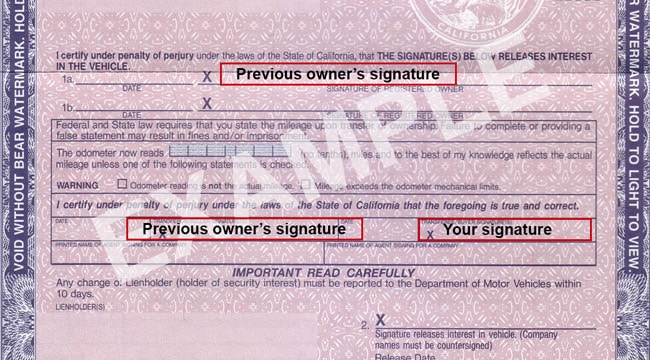
Maybe you bought the car without the title, or it never reached your name because the seller made a mistake or the paperwork was filed wrong.
Contact the previous owner, explain what happened and ask them to sign the title over to you.
Meet at the DMV if you can, so the paperwork is filled in right the first time. Both of you need a driver's license or ID.
If the previous owner has lost the title too, they apply for a duplicate first. A seller who can't produce a title at all may not own the car: run the VIN through a NMVTIS vehicle history report, as the U.S. Justice Department's title database urges buyers to do before they buy.
3. Apply for a Title in Your Name
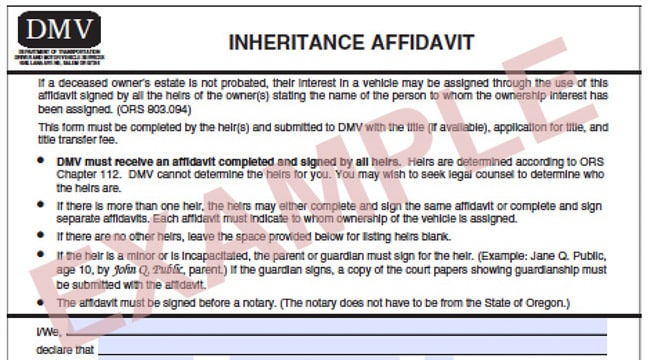
Got the car as a gift or an inheritance, but the title isn't in your name? You have two options:
- Ask the owner on the title to sign it over to you, then follow your DMV's standard transfer.
- Apply for a title with proof that the car is yours, such as estate papers. California charges $15 for a transfer, with a Statement of Facts (REG 256) for a family gift or inheritance; Texas charges $28 or $33 by county, and Florida $75.25.
If the owner has died, you will usually need the death certificate and proof that you are the heir. Our guide to selling a deceased person's car covers that paperwork.
Once the title is in your name, you are responsible for registering and insuring the car.
4. Use a Bill of Sale for an Old Car
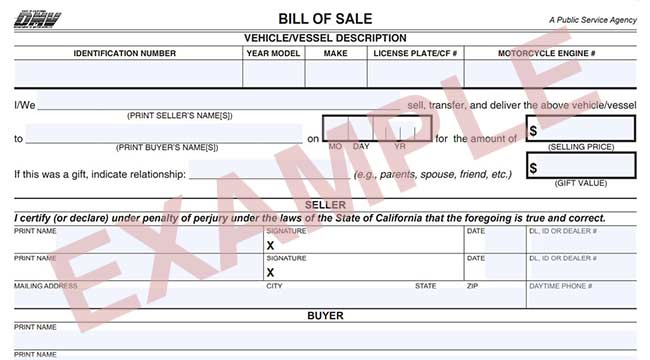
Some states don't title older cars, so the owner proves ownership another way. New York issues no title for a car of model year 1972 or older; it gives a transferable registration instead. The cut-off differs a lot from state to state:
| State | No title needed for |
|---|---|
| New York | Model year 1972 or older |
| Georgia | Model year 1962 or older |
| New Hampshire | Model year 1999 or older |
| Connecticut | More than 20 model years old |
| Maine | More than 25 model years old |
| Alabama | More than 35 model years old |
If your car qualifies, sell it with a bill of sale and the old registration (in New York, the transferable registration). Check your own state's cut-off with its DMV first.
5. The Vermont Loophole (Closed Since 2023)
For years, Vermont needed no title for a car over 15 years old, so out-of-state owners registered one there with just a bill of sale. That route is closed. Since a June 26, 2023 policy update, Vermont's DMV won't register a non-resident's car until the owner shows a legitimate connection to the state, as Hagerty reported.
Vermont's own exemption has narrowed too. It now covers only cars that were over 15 years old on January 1, 2024, registered in Vermont and unsold since; a new owner needs a title, and the 6% purchase and use tax is due at registration.
Unless you live in Vermont or have a real tie to it, look at a bonded title instead.
6. Pay Off the Loan
With a car loan, you own the car, but the lender is the lienholder and holds the title (or an electronic title) until you pay it off. You can still sell privately or to a dealer.
If you are selling a financed car privately:
The cleanest way is to pay off the loan first. The lender releases the lien, you get a clear title, and you can sell the car privately like any other.
If you can't, refinance, or use the buyer's money to clear the loan if the buyer agrees. Many buyers won't, since the title can't pass to them until the lien is released.
If you are selling a financed car to a dealer or car buyer:
If you can't pay off the loan, or a private sale takes too long, sell to a dealer or a car-buying service that takes financed cars, such as CarBrain. CarMax, for one, asks for the title or the payoff information. Our guide to selling a financed car without paying it off compares the routes.
The buyer settles the loan with your lender, which saves you the paperwork. In Texas, for example, the lender then has 10 business days to release the lien.
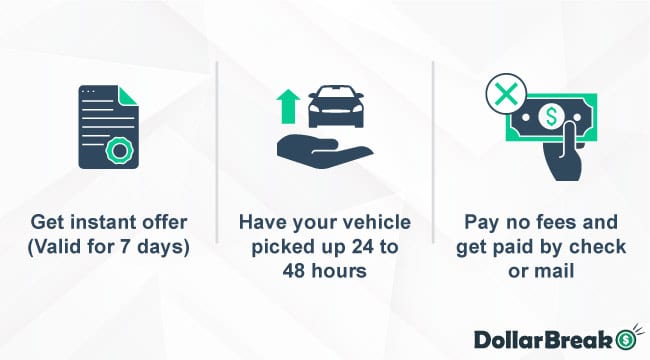
CarBrain gives an instant online offer for most cars, and you have up to 7 days to accept it.
Ask your lender for the payoff amount first, then compare it with the offer.
On an offer over $1,000 that covers the loan, CarBrain pays your lender directly, using a payoff or guarantee letter. If you owe more than the offer, you clear the difference first.
CarBrain Summary
- Call for a free quote – (844) 407-2200
- Get cash for your car in under 48 hours
- CarBrain buys cars in over 7 conditions
- Up to 7 days to accept CarBrain’s offer
7. Get a Bonded Title
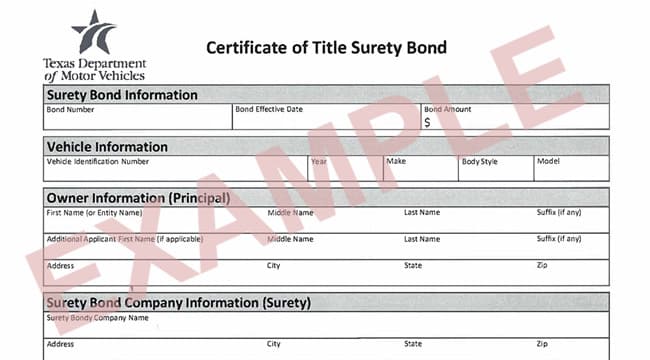
A bonded title is a title the state issues against a surety bond when you can't prove ownership the usual way. You can then register, insure or sell the car with it.
The surety bond protects the state and anyone who later proves a better claim to the car. Each state sets how big it must be.
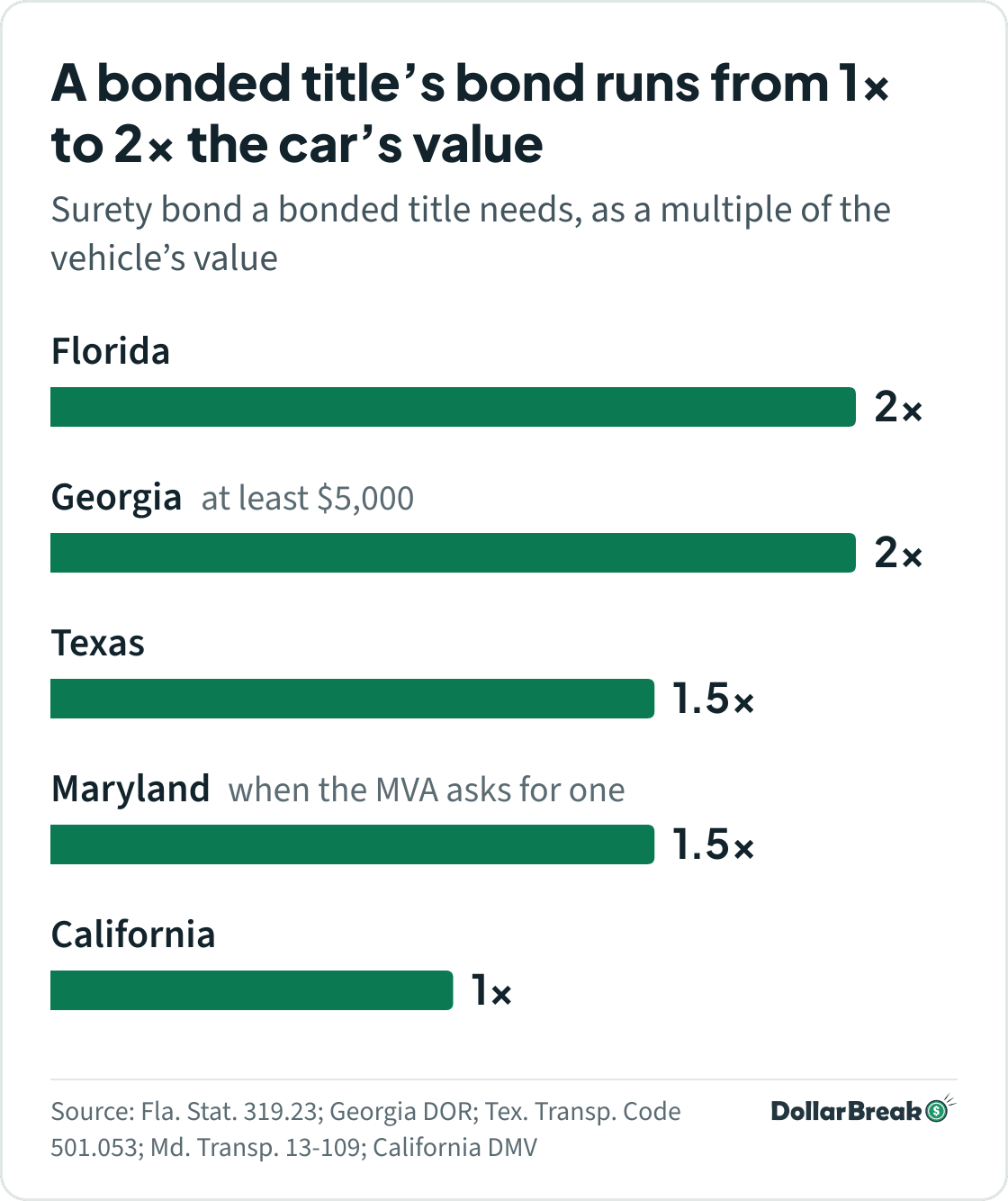
The bond is a multiple of the car's value: equal to it in California, 1.5 times in Texas and Maryland, and 2 times in Florida and Georgia (at least $5,000 in Georgia). You don't pay that sum; you pay a surety company a premium for the bond.
Each surety sets its own premium; in Texas, sureties file their rates with the state Department of Insurance. Get quotes from a few licensed sureties before you buy.
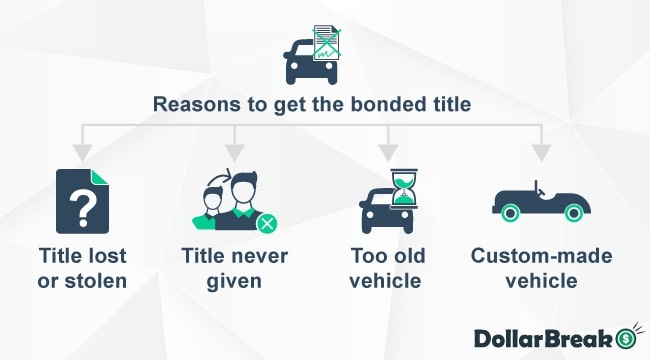
Reasons to get a bonded title:
- The original title was lost or stolen
- You paid for the car but never got the title, and the lender is out of business
- The car is too old to have a title
- The car is custom-built
Not every state offers bonded titles, and those that do set limits. Where none is available, look at a court-ordered title instead.
Where the rules differ:
- Georgia issues none for a 1985 or older car, or for an abandoned vehicle
- South Dakota offers one only for a vehicle 30 or more years old with no record on file
- Maryland's MVA may ask for a bond of 1.5 times the value
Ask your DMV whether it issues bonded titles before you buy a bond. Where it does, the process usually runs in three steps:
- Get the bond amount: the state sets the car's value, not you. Texas, for example, works out the value itself and sends a notice with the bond amount.
- Buy the surety bond from an insurance or bonding company. In Texas you have one year from the notice to buy it.
- Apply for the title: give the DMV the bond with your bill of sale, registration or other proof. Texas charges a $15 administrative fee with the application.
In Texas and Florida, the bond expires after 3 years.
A bonded title won't help with a car you can't show you acquired legally: Georgia, for one, refuses bonded titles for abandoned vehicles.
8. Get a Court-Ordered Title
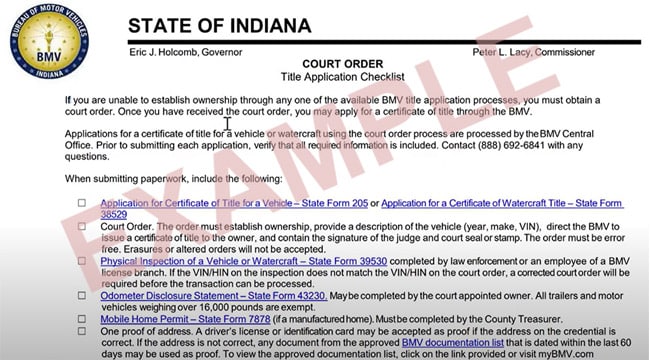
A court-ordered title is the last resort, when papers are missing, the title is damaged or the DMV has turned you down.
Not every state accepts one. Texas won't issue a title on a court order; its routes are a bonded title or a hearing with the county tax assessor-collector. Pennsylvania does, in these steps:
To get a court-ordered title in Pennsylvania:
Step 1: Start a court proceeding to be declared the owner
Step 2: Request the owner and lienholder information from PennDOT on form DL-135
Step 3: Notify everyone with an interest in the car of the court proceeding
Step 4: Attend the hearing before a judge
Step 5: Take the certified court order to PennDOT, which issues the title; sales tax is due on the car's fair market value
It is slow and may add court fees. Hagerty writer Rob Siegel, who bought a 1966 BMW from a seller with no paperwork, got a clear title through a Texas county tax-assessor hearing after waiting nearly a month for it.
9. Sell the Car for Parts
Junkyards and salvage yards buy cars to strip for parts, but each state limits when they may do it without a title. In Texas, a used-parts recycler may buy without one only if the car is at least 13 years old, bought for parts or scrap, and unregistered for at least 7 years.
In Florida, a recycler can take a car worth under $1,000 and at least 10 model years old on a derelict-vehicle certificate; buying without the right papers is a third-degree felony for the recycler. Call the yard first and ask what it needs, and see our guide to selling a car for parts.
Sign a purchase agreement that says the car is sold for parts and without a title.
Some car-buying services take cars without a title, too. Here is what each says:
| Buyer | Without a title? |
|---|---|
| Peddle | Many of its buyers take cars without one |
| Wheelzy | May, depending on where the car is; call to check |
| CashForCars | Needs one in many cases; rules vary by state, and its title specialists help |
| CarBrain | No: it needs a valid, signed title |
| Pick-n-Pull | Usually the title; other papers depend on the state |
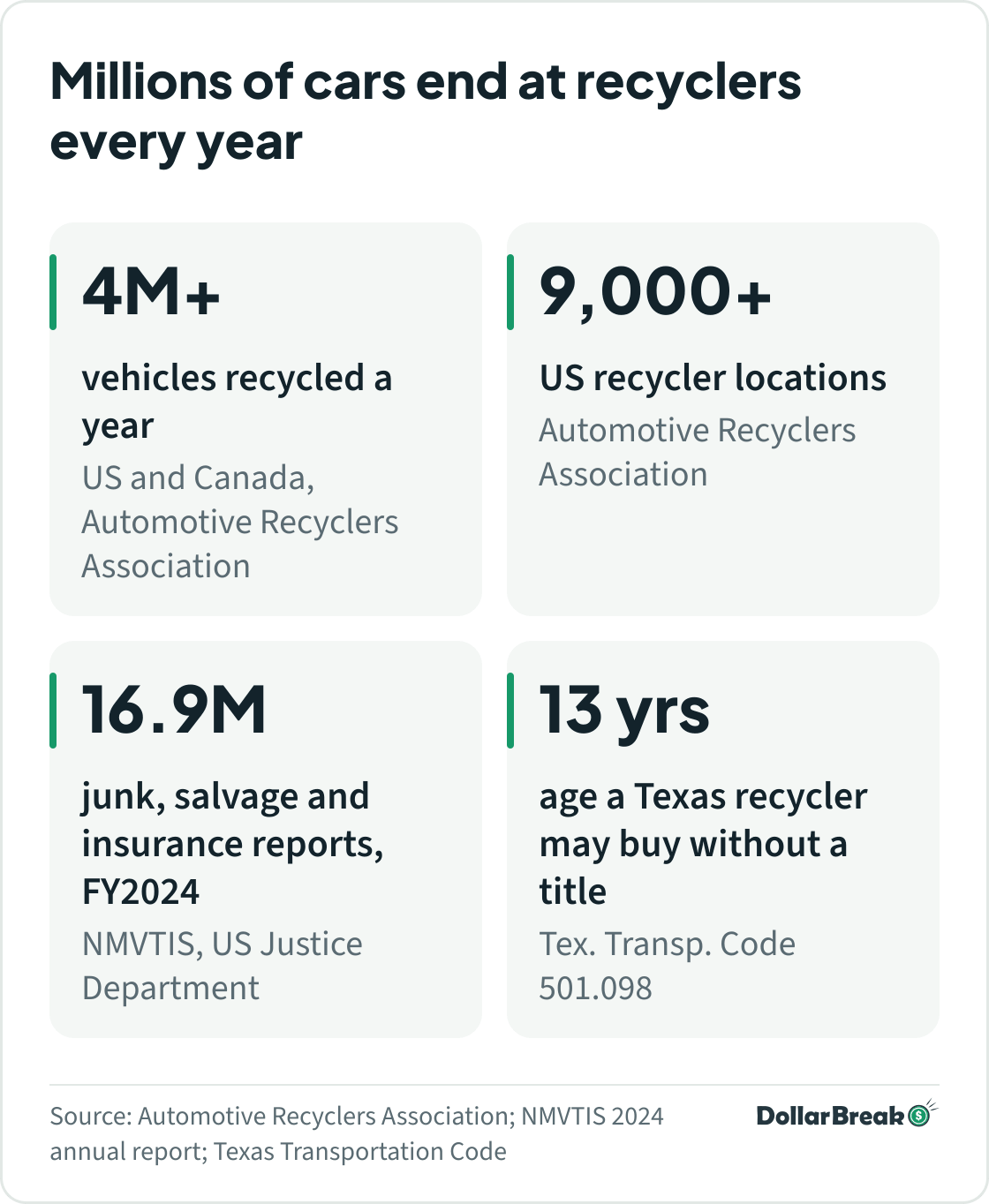
There are plenty of yards to call. The Automotive Recyclers Association counts more than 9,000 US recycler locations, and the industry recycles over 4 million vehicles a year in the US and Canada. In fiscal 2024, junkyards, salvage yards and insurers sent 16.9 million junk, salvage and total-loss reports to NMVTIS, the federal title database.
Reasons a Title Goes Missing
The title is the official record of who owns the car, so keep it somewhere safe, such as a safe or a safe deposit box.
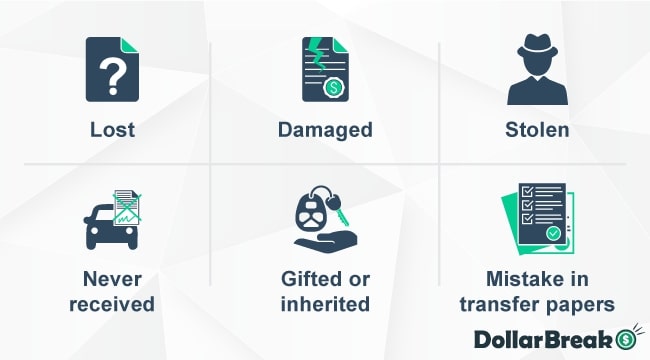
If yours is missing, the reason usually points to the fix:
- The title was lost during a move
- It was damaged by fire, water or another accident
- It was stolen
- The dealer that sold you the car never delivered it
- The car was gifted or inherited
- The transfer papers were filed incorrectly
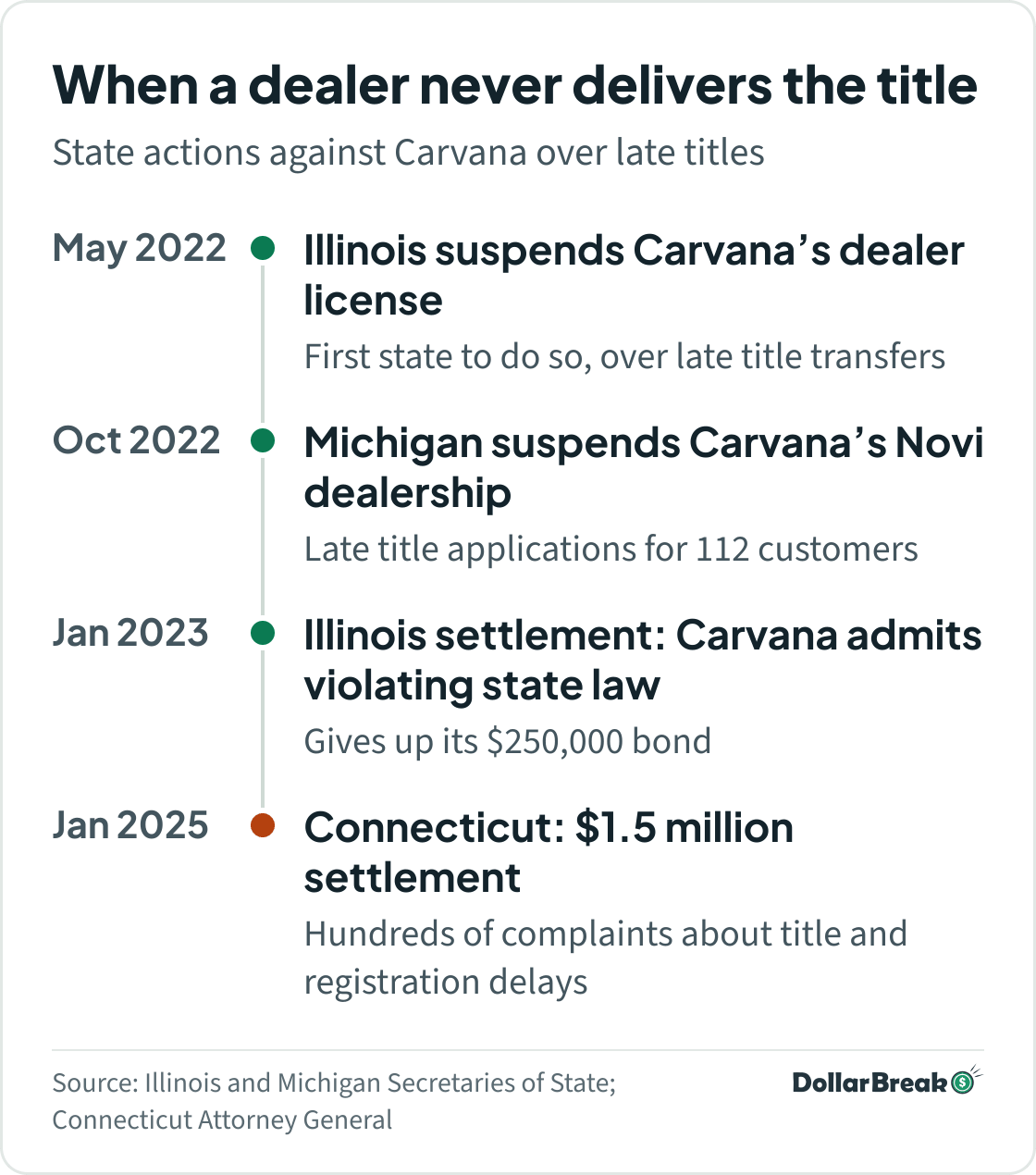
Big dealers miss titles too. Illinois suspended Carvana's license in May 2022, and in a January 2023 settlement Carvana admitted violating Illinois law and surrendered its $250,000 bond. Michigan suspended its Novi dealership in October 2022, alleging late title applications for 112 customers, and Connecticut settled with Carvana for $1.5 million in January 2025 after hundreds of complaints about title and registration delays.
Why the Title Matters
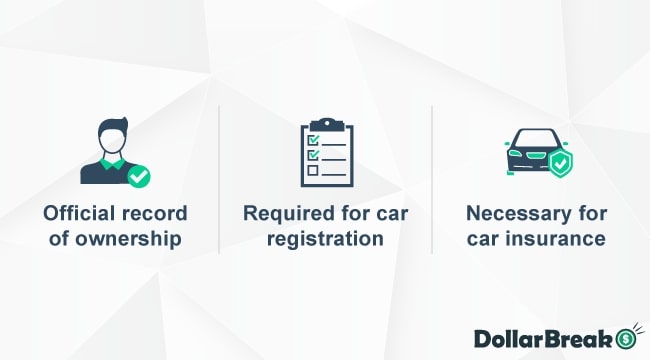
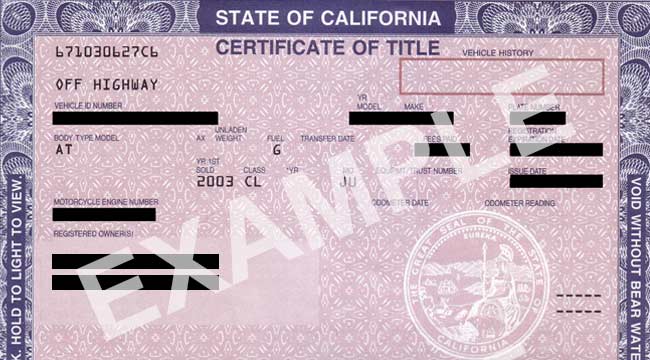
The title is the state's official record of ownership: without it, you can't legally transfer the car to a buyer.
You also need it to register the car, insure it or use it as collateral for a loan.
A car title shows:
- Vehicle identification number (VIN)
- Make, model and year
- Owner's full name
- Owner's address
- Title issue date
- Odometer reading on the issue date
- Signatures of the buyer, seller and a state official
Selling a Car Without a Title: FAQ
Can you register a car without a title?
Not unless your state exempts the car. New York, for example, issues no title for model year 1972 or older and registers those cars without one.
Can you go to jail for selling a car without a title?
In Texas, the penalty is a fine, not jail: selling a Texas-registered car without holding its title is a misdemeanor fined $1 to $100 for a first offense. Rules differ by state; see where selling a car without a title is illegal.
Can I sell my car without a title to a dealership?
Usually you need the title or, for a financed car, the payoff information: CarMax asks for one or the other. In Florida, a car with an electronic title can be traded in at a Florida dealer without a paper copy.
Can you sell a car for parts without a title?
Sometimes, to a licensed recycler and only under your state's rule. In Texas the car must be at least 13 years old and unregistered for 7 years; in Florida a recycler can use a derelict-vehicle certificate for a car worth under $1,000 that is at least 10 model years old.
Can I sell my car without the title in hand?
If your lender holds it, yes: CarMax, for example, buys with the payoff information instead. If the title is lost, get a duplicate first; Florida prints one the same day, in person, for $10 more.
Can you sell a car with a bonded title?
Yes: a bonded title is a real title, so you can sell the car with it. In Texas and Florida, the bond behind it expires after 3 years.