This list of free stuff for kids by mail holds only offers whose own page still says they mail, checked October 15-16, 2026. Fewer than half of the 36 freebies on page one’s lists passed. Each entry quotes who qualifies and how long it takes, and summer freebies, birthday clubs and a safety checklist follow.
Key takeaways
- 4 book programs mail all year: Imagination Library sends more than three million books a month, and the first one can take 8 to 12 weeks.
- 2 free magazines still print: LEGO Magazine comes 5 times a year for ages 5 to 9, and Netflix Family Magazine ships only to US addresses.
- 6 small mailings cost two stamps at most: stickers, a fan-club kit, stamps, milkweed seeds and state travel guides.
- Santa writes back from Indiana: volunteers there answered over 23,000 letters in a year, while USPS Operation Santa only sends a gift if a stranger adopts the letter.
- Summer is food and fun, not mail: SUN Bucks gives $120 per eligible child in 37 states and DC for 2026, and Kids Bowl Free offers 2 games a day.
- 17 of 36 freebies on page one still mail: CDC stopped mailing its books, a toy panel’s domain is for sale, and Natural Inquirer paused mailing on September 25, 2026.
Every freebie at a glance
| Freebie | What arrives | Who qualifies |
|---|---|---|
| Imagination Library | A book a month | Birth to 5, where a partner pays |
| PJ Library | A book a month | Jewish families, ages 0 to 12 |
| Braille Books Program | A braille book a month | Blind or low-vision braille readers |
| New Worlds Reading | 9 books a year | Florida VPK to grade 5, below grade level |
| LEGO Magazine | 5 issues a year | Ages 5 to 9 |
| Netflix Family Magazine | About 2 issues a year | US addresses |
| PETA Kids | Stickers, a magazine | US addresses |
| WWF sticker | One sticker | US addresses |
| Last Kids on Earth | A fan-club kit | US residents |
| Free stamps | A stamp packet | Anyone who asks |
| Milkweed seeds | 15+ seeds | One per household, your stamps |
| State travel guides | A printed guide | Anyone who asks |
| Santa Claus, Indiana | A reply from Santa | Anyone, by the cutoff |
| USPS Operation Santa | A gift, if adopted | Kids in most of the US |
| Hasbro FunLab | Toys to test, if picked | Families Hasbro selects |
| Talking books (NLS) | Audio and braille books, a player | Kids who can’t read print |
| Monkey in My Chair | A kit for school | Kids with cancer |
4 free book programs that mail all year
Dolly Parton’s Imagination Library
Dolly Parton’s Imagination Library mails a book every month, addressed to your child, “at no cost to the child’s family.” Its terms cover children “from birth to five (5) years old,” registered by a parent, guardian or other adult aged 18 or over.
The catch is where you live. The library says it “must have a local partner to cover the book and mailing cost” for each area, so you enter your address on its availability page first. Some partners take online sign-ups, others a mailed form or a visit in person.
Some states pay for everyone. Tennessee has covered the whole state since 2004, and Oregon made every child under 5 eligible in May 2025. Ohio added enrollment to its birth-certificate paperwork in 2025, Spectrum News reported.
Where money runs short, children wait. In 2022 the Johnson County, Indiana, program hoped to reach 800 children on a waiting list in Greenwood, WRTV reported. Once you are in, the library’s help page says the first book “may take up to eight to twelve weeks.”
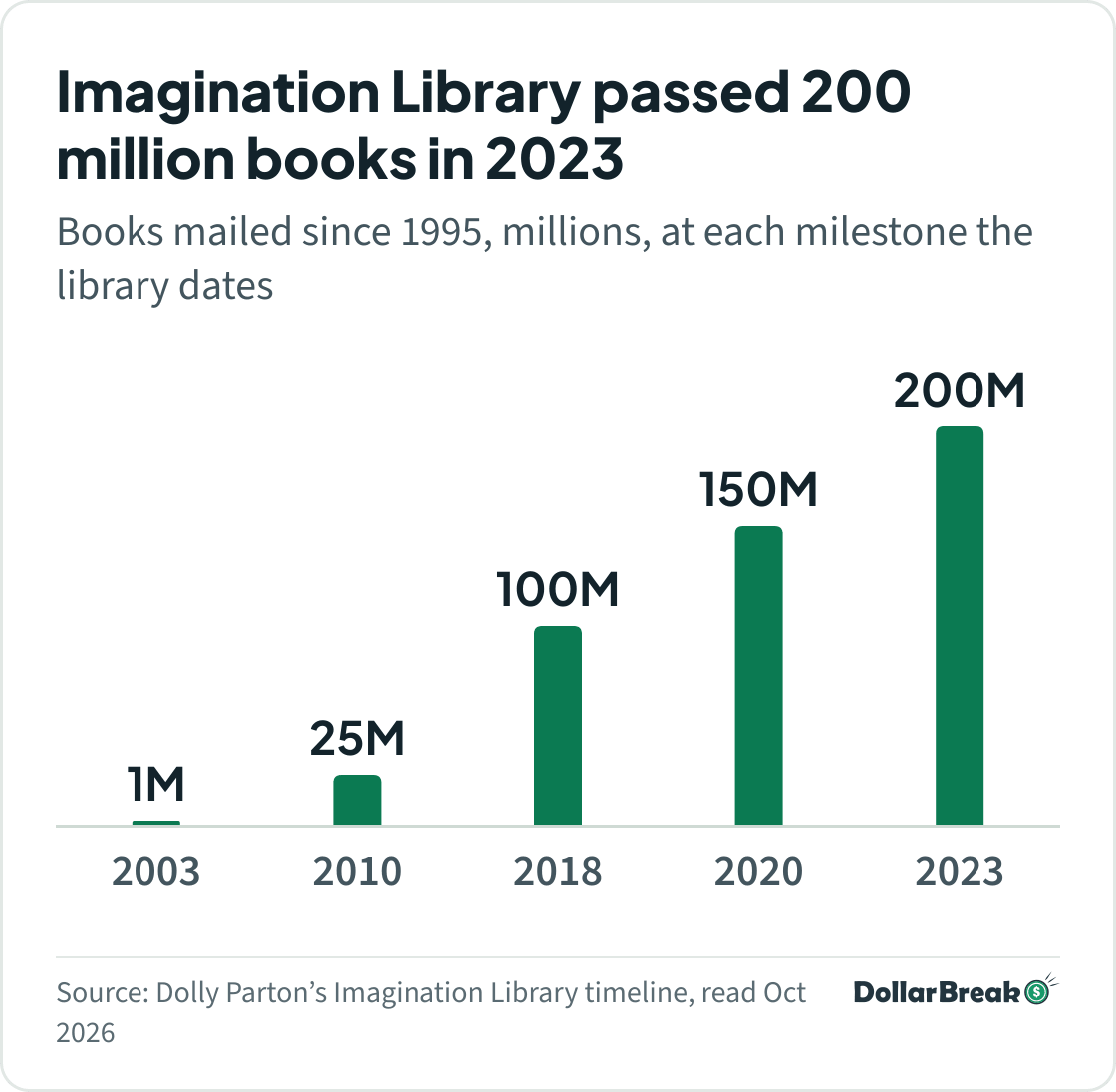
The library’s timeline counts 1 million books by 2003, 25 million by 2010, 100 million by 2018, 150 million by 2020 and 200 million by 2023, and it now sends more than three million a month worldwide. It says 1 in 7 US children under 5 got its books in 2024. For more free stuff for babies, such as registry boxes, see our free baby stuff list.
Worth it? Yes, for every child under 5 whose area has a partner. It arrives every month until the fifth birthday.
PJ Library
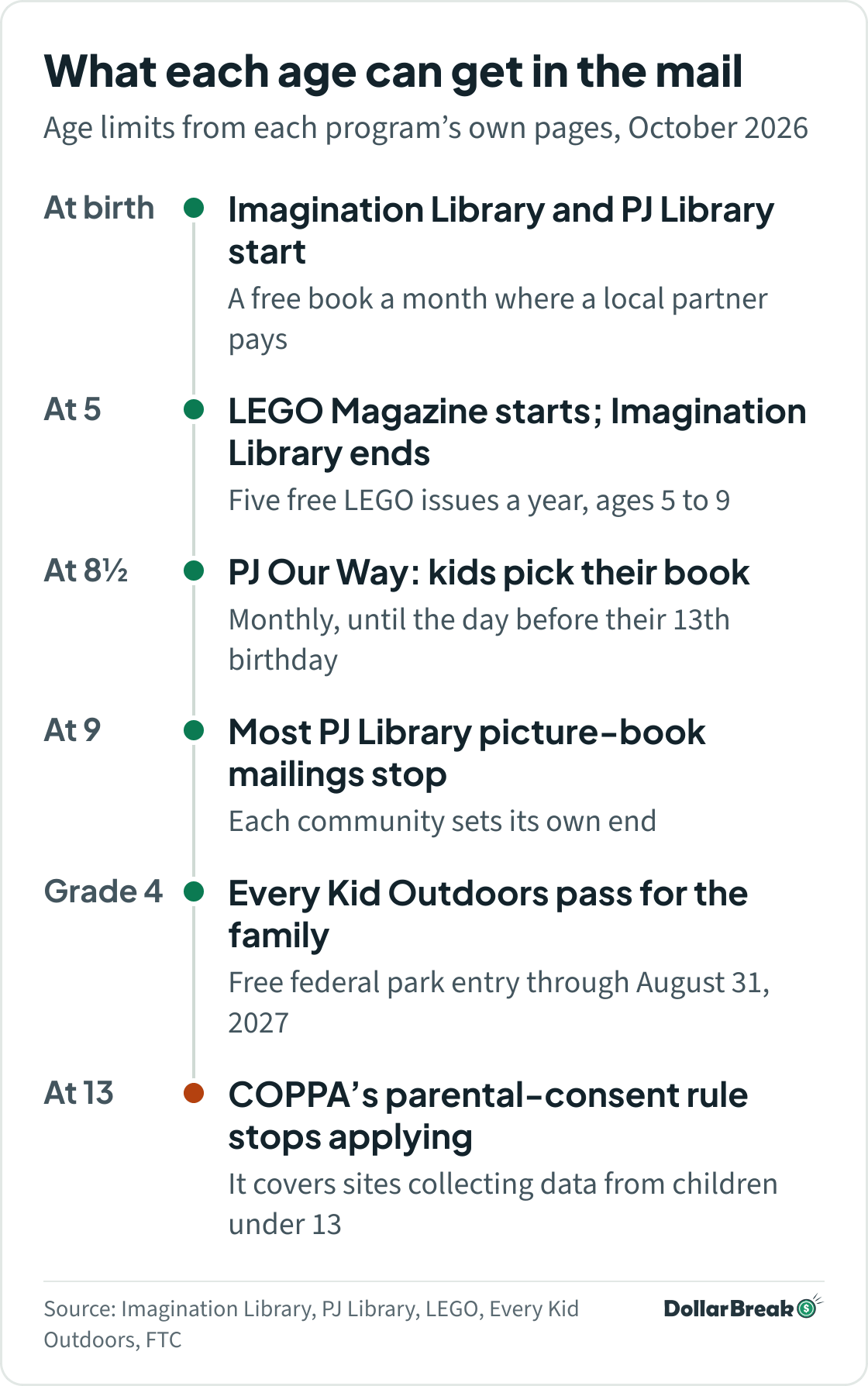
PJ Library mails board books, picture books and early chapter books for ages 0 to 8. Its FAQ says “all families raising Jewish children are eligible,” and the sign-up form asks you to confirm that your family “includes at least one Jewish member.” Families who identify as Messianic Jewish are not eligible.
It is “free to families forever,” and calls itself “a donor-supported program.” You pick your local community on the form, and “each community determines how long they will run PJ Library, but most go up until age 9.” From age 8½ to the day before 13, PJ Our Way lets kids choose their own book online each month.
In Columbus, Ohio, the local federation estimated about 1,100 subscribers, the Columbus Jewish News reported in 2023. PJ Library says it mails over seven million books a year in 40 countries. Its privacy notice says it may share your details with the partner for your ZIP code.
Worth it? Yes, for any Jewish or interfaith family with a child under 13. Older kids get a say in the book, which keeps the envelope welcome.
Braille Books Program (American Action Fund)
The American Action Fund’s Braille Books Program sends blind children a free braille book every month from a popular children’s series. To enroll, “each applicant must be blind or low vision, and be a Braille reader.” Books are the child’s to keep.
The 2026 list runs a title a month, such as an Encyclopedia Brown mystery in October. Changes to an address “may take up to two months.” The fund also gives tactile art and drawing kits to children through its Tactile Art Program.
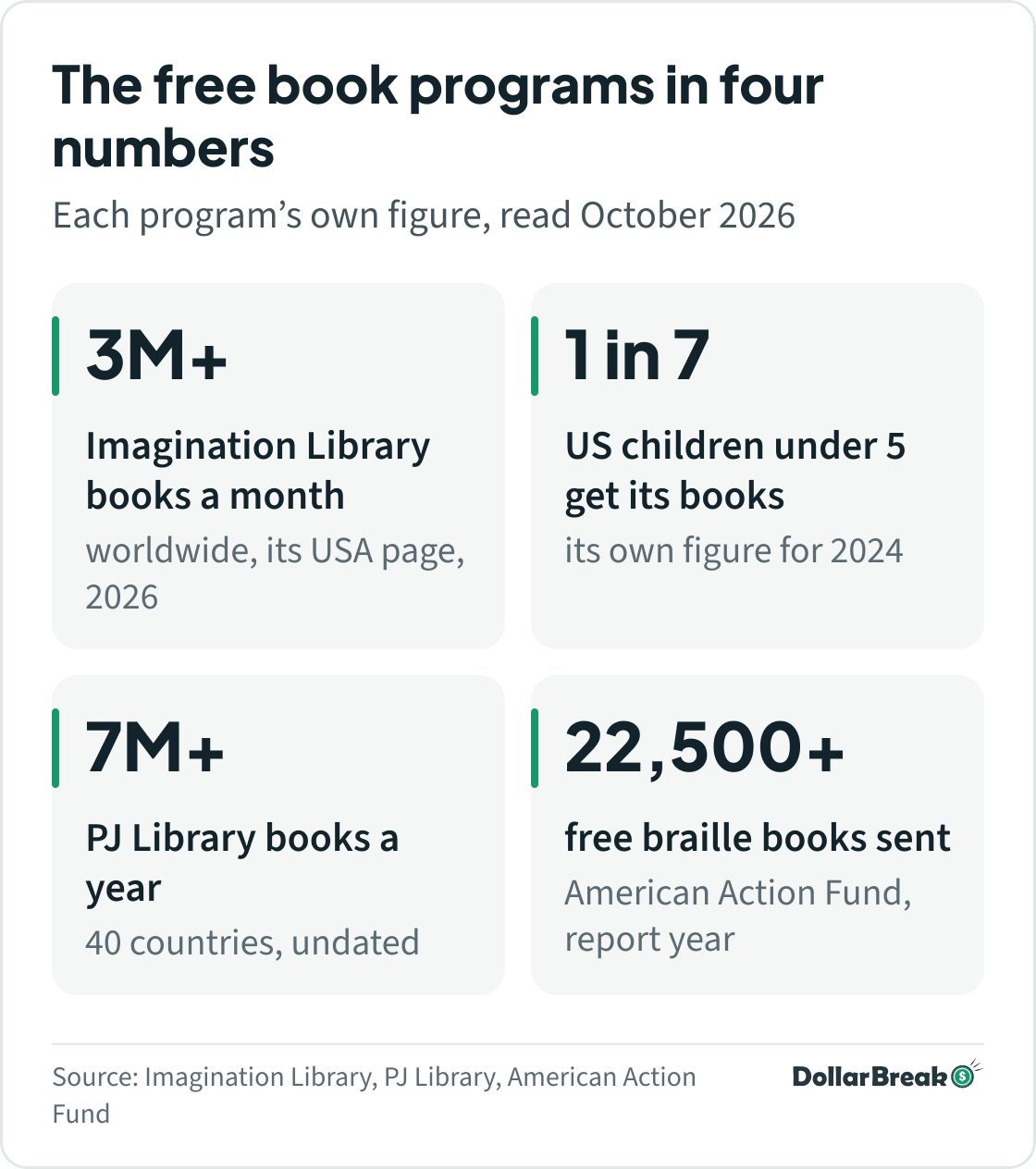
The fund’s annual report says it sent more than 22,500 free braille books in its report year. For children who need audio books instead, see the talking-book library below.
Worth it? Yes, for any child who reads braille. The books are theirs to keep.
New Worlds Reading (Florida)
New Worlds Reading mails Florida children 9 free books and activities a year, up to 63 books by the end of 5th grade. Its eligibility page covers “VPK - 5th graders in a VPK program, public school, or charter school, who have ever tested below grade level in reading” since August 2021. There is no income test.
A parent fills in a five-minute online form with no paperwork. Books come in English, Spanish, Haitian Creole or braille. The program checks each child against state records, which “may take up to several months,” and private-school and homeschooled children often can’t be matched.
Worth it? Yes, for Florida public and charter school families. The site says 80% of those students qualify, so most should apply.
2 free kids’ magazines by mail
LEGO Magazine
LEGO Magazine, called LEGO Life Magazine until its rename, is “great for kids 5-9 years old.” LEGO says the 28-page printed magazine “is sent to your home 5 times a year” and is “completely free of charge,” with no credit card or trial.
A parent or guardian signs up through a free LEGO account and enters the child’s name, age and your address. On October 15, 2026, the page said a new sign-up’s first issue would be March 2027, so expect a wait of months.
Know what it is: LEGO’s privacy policy lists magazines among the “printed marketing materials” its mailing partners send. It seeks a parent’s consent for anyone under 16.
Worth it? Yes, for a LEGO fan aged 5 to 9, if you can live with a magazine that is also marketing.
Netflix Family Magazine
Netflix Family Magazine is “an actual, physical magazine your kids can hold in their hands,” Netflix says. Its FAQ says it is “totally free,” ships only to US addresses, one copy per address, and needs no Netflix account.
It is not monthly. The site lists 11 issues from Spring 2022 to Summer 2026, two a year since 2023. You choose magazine only, the newsletter only, or both, and you don’t sign up again for each issue.
Worth it? Yes, for kids who watch Netflix shows. Two issues a year is a treat, not a subscription.
6 free stickers, stamps, seeds and guides
These are one-off mailings, good for a child who likes getting mail. For hundreds more sticker offers, see our free stickers list.
PETA Kids stickers and magazine
PETA Kids mails free animal stickers and a free Kids’ Guide to Helping Animals magazine with “puzzles, quizzes, and free stickers too.” Both pages say it can send literature only to US addresses. Each form also signs you up for PETA’s emails.
The site greets visitors with “Under 13? Ask your parents bee-fore you continue!” The magazine argues PETA’s animal-rights case, so read it first if that matters to you.
Worth it? Yes, for animal-loving kids whose parents are fine with PETA’s message.
World Wildlife Fund sticker
The World Wildlife Fund form asks for your name, email and postal address to “request your FREE sticker.” It is “unable to ship the sticker to addresses outside of the United States.”
Worth it? Yes, as a two-minute request, if a WWF email list is a fair price for a sticker.
The Last Kids on Earth fan club
The Last Kids on Earth Club, for fans of the book series, mails a welcome kit “right to your home” along with its newsletter. It is “open to US residents only,” and the page says to “allow 6-8 weeks for delivery.”
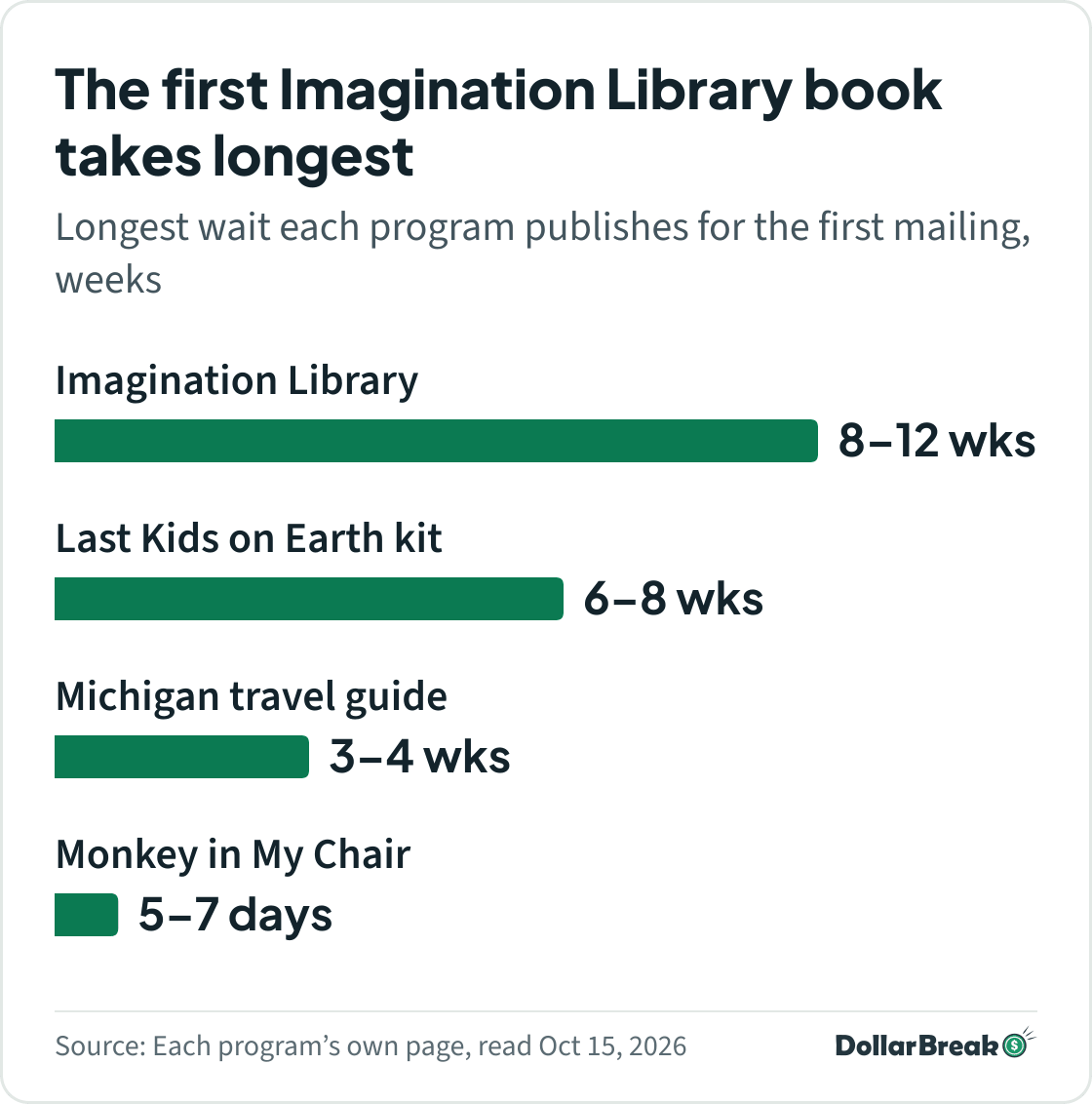
That 6 to 8 weeks is typical. Only Imagination Library’s 8 to 12 weeks for a first book is longer among the waits these programs publish.
Worth it? Yes, for fans of the books. Sign up two months before a birthday.
Free stamp packets (ISWSC)
The International Society of Worldwide Stamp Collectors gives “free stamp packets to anyone who submits a request.” Send a letter or email with your full name and address, including any apartment number. You don’t need to join.
School stamp clubs can ask too, with the number of kids, their ages and interests. The page gives no wait time.
Worth it? Yes, for a curious child. It costs an email or one stamp.
Milkweed seeds (Live Monarch Foundation)
The Live Monarch Foundation sends “15+ Butterfly Garden seeds including Milkweed and growing instructions FOR FREE.” You mail a self-addressed stamped envelope, one per household, to its 2026 Seed Campaign box in Blairsville, Georgia. A donation is welcome but not required.
So it costs two stamps: one on your letter, one on the envelope it comes back in. Rob Greenfield’s free seed project, on other lists, says all its seed programs are “on pause indefinitely.”
Worth it? Yes, for a spring project: kids plant the seeds and watch for monarch butterflies.
Free state travel guides
State tourism offices still mail printed guides for free. Texas ships its State Travel Guide within the US, Canada and Mexico. Pure Michigan asks you to allow 3-4 weeks for its guide, and New York mails a brochure on request.
A parent fills in the form. A guide to a state you plan to visit, or one far away, gives a child maps and photos to pore over.
Worth it? Yes, before a road trip. Order two states and let your child plan a day in each.
2 ways to get Christmas mail from Santa
Santa Claus, Indiana
Volunteer elves in Santa Claus, Indiana answer letters sent to Santa Claus, P.O. Box 1, Santa Claus, IN 47579. For 2025, letters had to arrive by December 13 “to ensure a reply by Christmas.” Check its page for the 2026 date, and put your return address on the envelope.
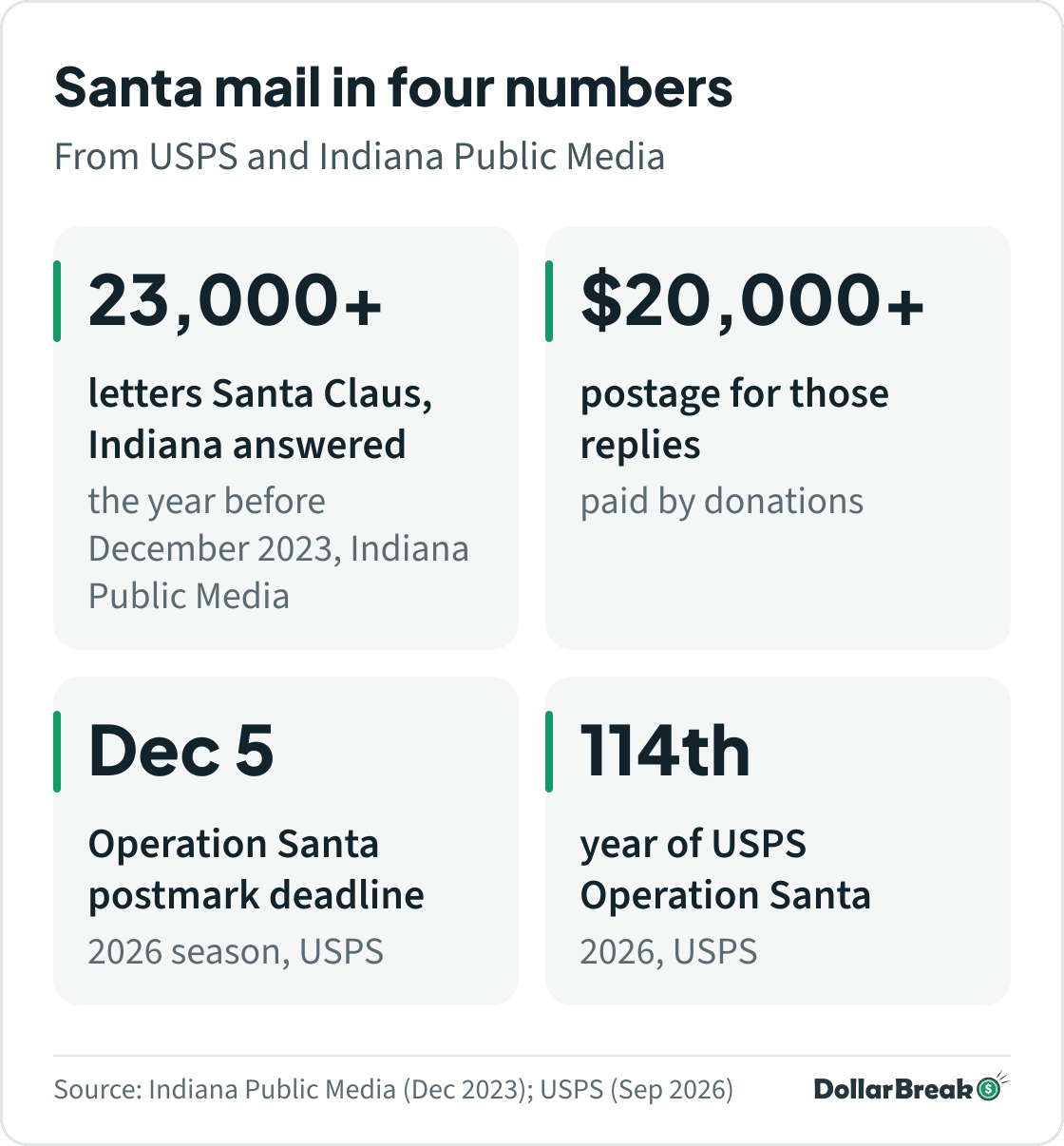
The reply is free; you pay one stamp. Indiana Public Media reported in December 2023 that volunteers had answered over 23,000 letters the year before. They match each letter to one of four form letters, and donations cover postage of over $20,000.
Worth it? Yes. It is the surest way for a child to get a letter back from Santa.
USPS Operation Santa
USPS Operation Santa, in its 114th year, does not send replies. A letter to Santa, 123 Elf Rd., North Pole, 88888, with a stamp and postmarked by December 5, 2026, may be posted online with personal details removed. A stranger can then adopt it and ship a gift, according to the USPS release of September 14, 2026.
Its FAQ is blunt: “There is no guarantee your letter will be posted,” nor that it will be adopted. In 2025 a USPS executive said it gets “far more letters than those adopting.” Adoption runs November 16 to December 12, 2026, and adopters pay the shipping.
For a family that needs gifts, Toys for Tots, run with the US Marine Corps Reserve, is the surer route, though its toys are handed out locally, not mailed. It has no national application: its site sends you to the local campaign for your county. Its FAQ, as search results show it, says most local chapters help children up to age 12.
Local rules differ, and many windows close in November. Some campaigns take requests from families online. Others take them only through approved agencies such as churches and schools.
Worth it? Only as a hope. A family that needs gifts should apply to its local Toys for Tots campaign in October, before the deadlines.
Free toys to test by mail
Hasbro FunLab
Hasbro FunLab is “Hasbro’s in-house toy and game testing group.” Testing happens at its Pawtucket, Rhode Island, site or online. Under its In-Home program, testers “will be mailed product to test and meet virtually via Microsoft Teams.”
Joining is not a toy. You register, then Hasbro picks people for each study, and one-time “On Call” tests are booked one day to one week ahead. Its pages don’t say whether testers keep the toy or get paid, and its FAQ section loads empty.
Two other toy panels on page one’s lists didn’t check out. Far Out Toys’ old domain is parked for sale, and we found no testing program on Zuru’s site.
Worth it? Worth a sign-up, not a promise: treat it as a research panel that may never call.
2 free programs for kids with a disability or illness
Families of autistic children often look for the National Autism Association’s free Big Red Safety Box, with door alarms and an ID bracelet. Its page said “OUT OF STOCK” on October 15, 2026, with a newsletter for restock news.
Talking books from the Library of Congress (NLS)
The Library of Congress’s National Library Service for the Blind and Print Disabled lends audio and braille books “instantly downloadable or mailed to your door for free.” It serves any US resident “unable to read or use regular print materials as a result of temporary or permanent visual or physical limitations.”
That includes a “perceptual or reading disability,” certified by a “competent authority.” Its page for families names dyslexia, and it lends players for free. You apply through your state’s network library.
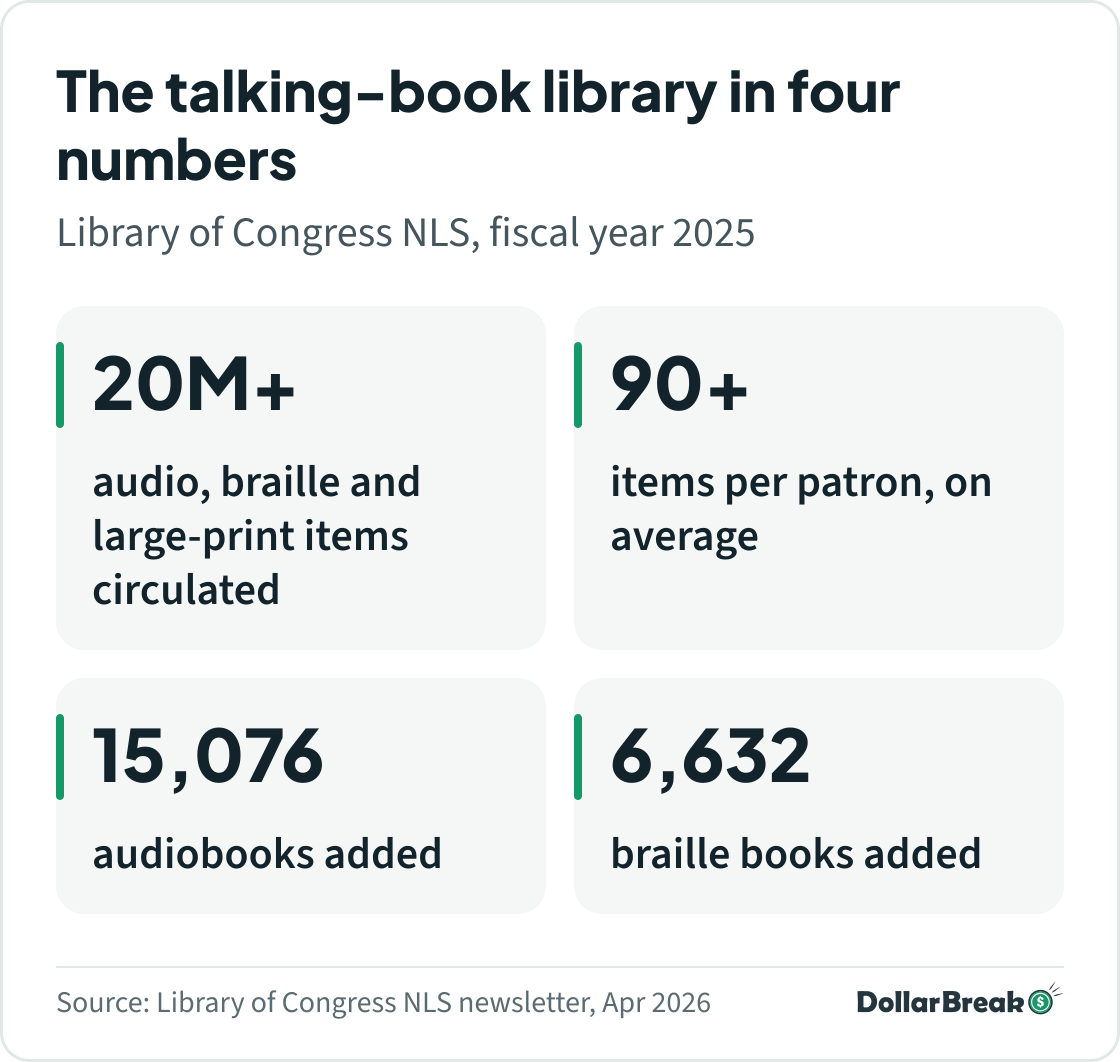
NLS circulated more than 20 million items in fiscal 2025, over 90 per patron, and added 15,076 audiobooks and 6,632 braille books. Its family page adds that “there’s no waitlist for titles.”
Worth it? Yes, for any child whose disability makes print hard. Check NLS’s list of who may certify the form.
Monkey in My Chair
Monkey in My Chair sends a free kit, built around a big stuffed monkey that holds the child’s seat at school. “Only children who are battling cancer are eligible,” and it may check with the hospital. Its FAQ says the kit is designed for ages 3 to 11, others can ask, and the child must have been in treatment within two years.
Requests “typically take 5-7 days from approval.” Families of children with other illnesses can buy the kit.
Worth it? Yes, for a child with cancer missing school. It keeps the child in class in spirit.
Free stuff for kids this summer (not by mail)
These don’t come in the mail, apart from some SUN Bucks cards, but they are free to kids who qualify. Most run in summer; BOOK IT! and the park pass run through the school year.
| Freebie | When | Who |
|---|---|---|
| SUN Bucks | Summer | Low-income school-age kids |
| SUN Meals | Summer | 18 and under |
| Kids Bowl Free | Summer, by alley | Kids at 1,300+ alleys |
| BOOK IT! | Oct to Mar, Jun to Aug | PreK to grade 6 |
| Barnes & Noble | July to August | Grades 1 to 6 |
| Every Kid Outdoors | School year | US fourth graders |
SUN Bucks (Summer EBT)
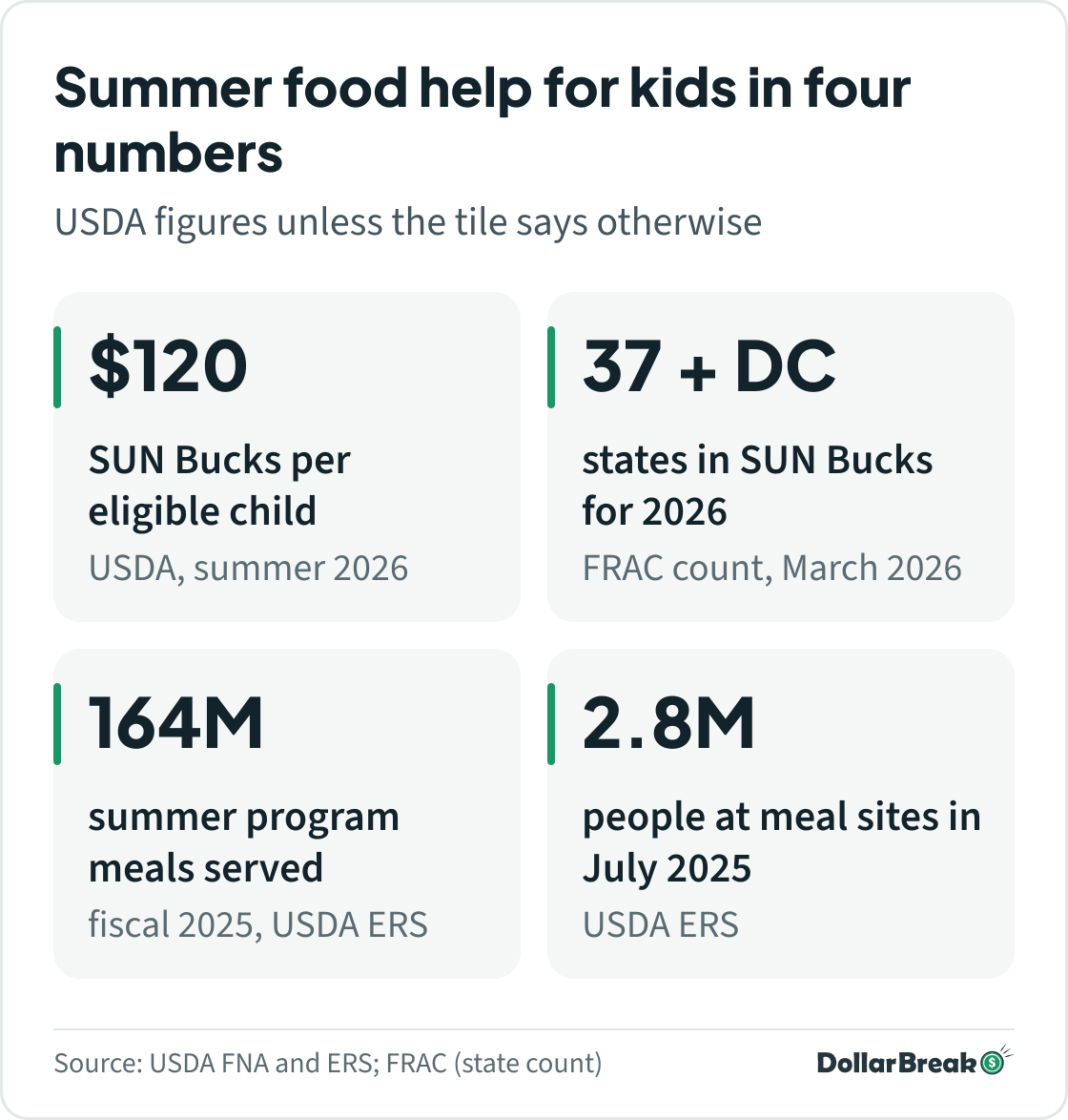
SUN Bucks gives “$120 in grocery benefits per eligible school-age child” for the summer. USDA’s family page says children in SNAP, TANF or FDPIR households are enrolled automatically, as are some children who get free or reduced-price school meals. Others apply to their state.
The money arrives on a SNAP account, a separate EBT card or another way, by state. For 2026, 37 states and DC signed up, FRAC counted; Florida, Texas and Georgia were among 13 that did not.
Cards can be slow. In the first summer, 2024, children in six states waited until just before school, Chalkbeat reported. In December 2025, San Francisco schools said some eligible families never got their June card.
Worth it? Yes: $120 per child for nothing, if your state takes part. Ask your state’s agency in spring.
SUN Meals (free summer meals)
Through USDA’s Summer Food Service Program, “kids aged 18 and under can get free meals and snacks during the summer” at schools, parks and other sites in eligible areas. Use its site finder; kids just show up. It served 164 million meals in fiscal 2025 and 2.8 million people in July 2025, USDA’s Economic Research Service reports.
Worth it? Yes, wherever a site is near you. It needs no form at all.
Kids Bowl Free
Kids Bowl Free offers “2 free games every day” at over 1,300 bowling centers. A parent registers the kids online, and coupons arrive by email. Each center sets its own days, times and season; many run May to August.
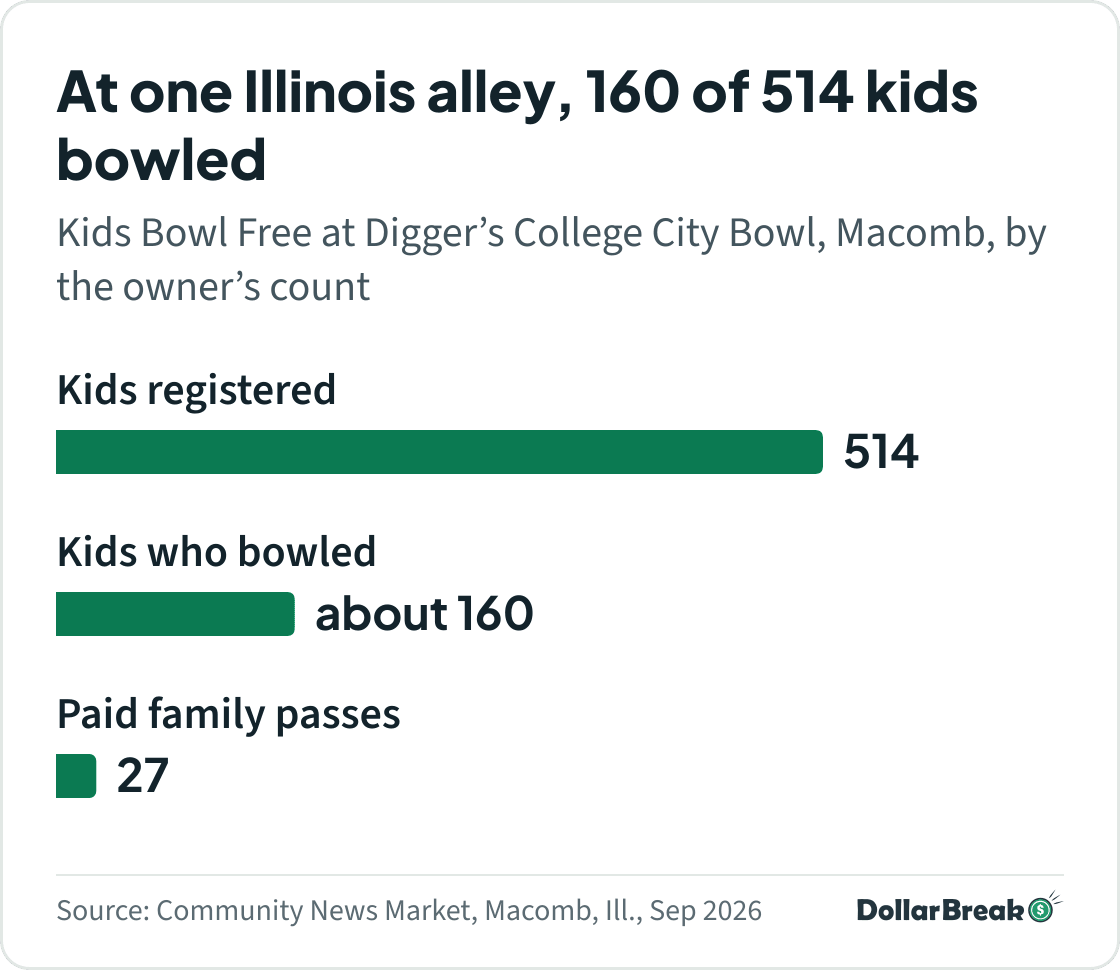
Shoe rental is often extra, at a price each center sets, and a family pass for adults costs money. In Macomb, Illinois, one owner counted 514 kids and 27 family passes, at $34.95, signed up. About 160 kids had bowled, Community News Market reported in September 2026.
Its privacy policy says the service is “directed at parents, not children” and offers promotional texts if you opt in. Its BBB profile showed one complaint in three years when we read it.
Worth it? Yes, if you will go: two games a day costs only shoe rental. Check your alley’s shoe fee first.
Pizza Hut BOOK IT!
BOOK IT! rewards PreK to 6th graders who meet a monthly reading goal with a certificate for a free one-topping Personal Pan Pizza. Teachers enroll classes for October to March, and homeschool parents use its app. A summer program runs June to August.
The limit is one certificate per child a month and five per family. Pizza Hut has run it since 1984.
Worth it? Yes, if your child’s class is not enrolled. Ask the teacher, or sign up as a homeschool parent.
Barnes & Noble Summer Reading
Barnes & Noble’s summer program gives kids in grades 1 to 6 a free book from a list after they read any eight books and log them in its journal. In 2026, as its pages appear in search results, you redeemed the journal in a store from July 1 to August 31. Watch for the 2027 journal in late spring.
Worth it? Yes, for kids who read eight books anyway. A library card covers the eight.
Every Kid Outdoors
Every Kid Outdoors gives “U.S. fourth-grade (or home-school equivalent) students” a free pass to federal lands. At sites that charge per person, it admits “all children under 16 and up to three adults.” The 2026-27 pass expires August 31, 2027, and you must print it on paper.
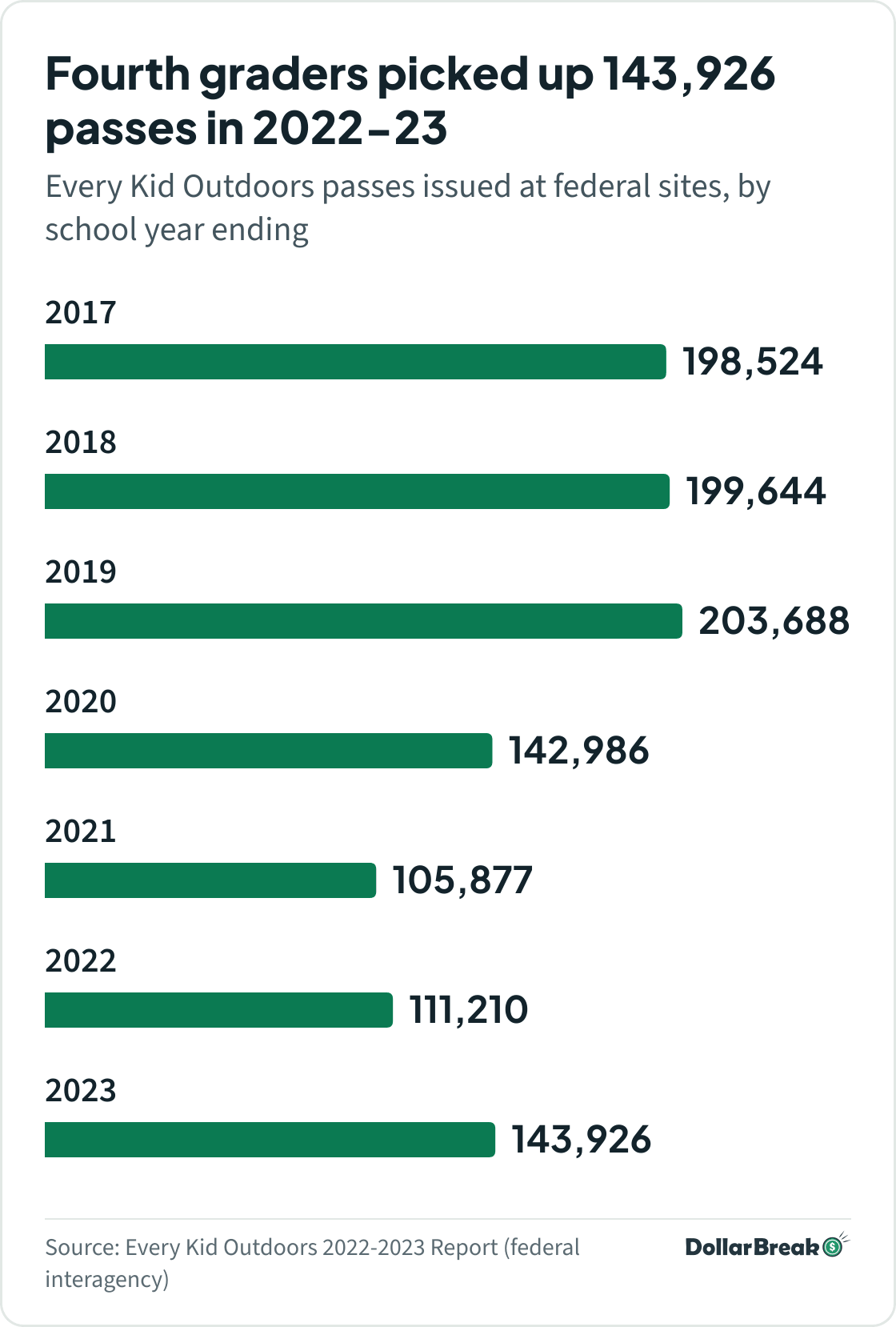
It doesn’t cover parking, camping or tours. In 2022-23, 1,464,919 vouchers were requested online, and fourth graders exchanged them for 143,926 passes at federal sites, the program’s report shows. Passes ran from 198,524 in 2016-17 to 203,688 in 2018-19, then fell to 142,986, 105,877 and 111,210 over the next three years.
Worth it? Yes, for any family with a fourth grader near a national park. Teachers can get one for each student too; see our free stuff for teachers.
Free stuff for kids on their birthday
Most birthday rewards need an account, and the clubs we checked set a minimum age of 13. Baskin-Robbins’ Birthday Club and Krispy Kreme Rewards both say so in their terms, as search results show them, so the reward sits on a parent’s account.
Build-A-Bear’s “Count Your Candles” is a discount, not a gift: your child pays their age for the birthday bear. For rewards that cost nothing, see our birthday freebies and free birthday meals.
What no longer mails, or never did
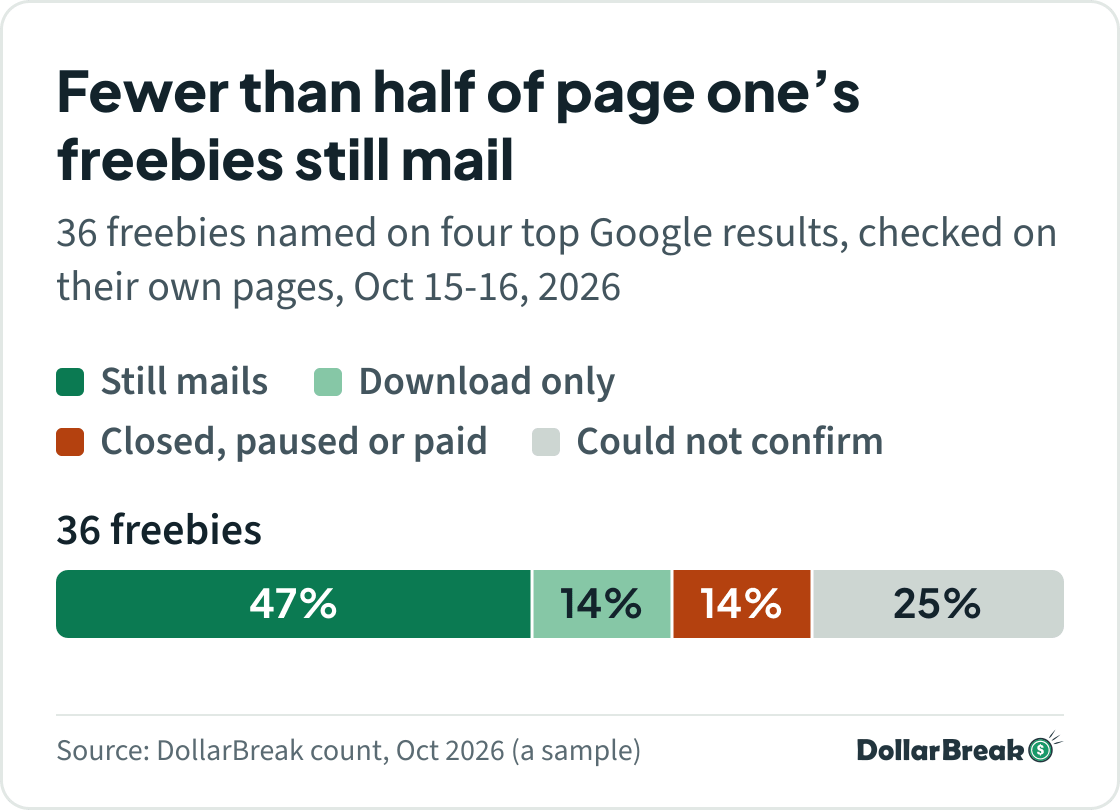
We checked the 36 freebies named on the four page-one lists we could read on each offer’s own page. 17 still mail, 5 are download only, 5 closed, paused or cost money, and 9 we could not confirm.
| Offer on other lists | What its own page says (October 2026) |
|---|---|
| CDC children’s books | CDC on Demand “has been retired”; books are downloads |
| Natural Inquirer coloring books | Mailing paused from September 25, 2026; download only |
| Sesame Street fire safety booklet | Print copies go to fire departments; others get a PDF |
| EPA Planet Protectors books | PDF downloads, no order line |
| Dinosaur Train poster | Print-at-home club items only |
| Far Out Toys Fun Lab | Domain parked for sale |
| Rob Greenfield free seeds | “On pause indefinitely” |
| Trader Joe’s Fearless Flyer | Email or in store, not mailed |
| NASA photos, White House, Disney replies | No page we found promises a reply |
| Zuru, Skyenimals, Cotopaxi, WCS stickers | Could not confirm a live offer |
Bottom line: A list is only as good as its last check. Before you fill in a form, make sure the offer’s own page still says it mails.
How to sign your kids up safely
- Make the request yourself. Under the FTC’s COPPA rule, sites must get “their parent’s verifiable consent” before collecting a child’s name or address under age 13. Imagination Library, LEGO and Kids Bowl Free all have the adult register.
- Know who gets the address. Imagination Library shares it with the local partner, though it says it “does not sell Personal Data.” PJ Library may pass it to your local partner. LEGO lists mailing partners and data brokers.
- Use a freebie email. PETA’s forms sign you up for its emails, and the Last Kids on Earth kit comes with a newsletter.
- Never pay for “free.” The FTC’s advice: “If you have to pay for shipping or fees to get your ‘free’ trial, it’s not really free.” LEGO’s page says it needs no card; skip any kids’ freebie that asks for one.
- Find more for yourself. Our free samples and free stuff by mail lists cover adults, and surveys for moms can pay for the stamps.
How we researched this
We read the four top Google results for “free stuff for kids by mail” and checked every freebie they name on the offer’s own page on October 15-16, 2026. Eligibility, waits and limits are quoted from each program’s terms, FAQ or sign-up page, and figures from its reports or USDA. What happened to families comes from the news reports linked beside it.
Free stuff for kids FAQ
How can my kid get free books by mail?
Check Dolly Parton’s Imagination Library for your address first: it mails a book a month from birth to age 5 where a local partner pays. Jewish families can add PJ Library, blind children the Braille Books Program, and Florida families New Worlds Reading. Our list of free books by mail adds programs for teens and adults.
Can kids get free magazines by mail with free shipping?
Yes. LEGO Magazine (ages 5 to 9, five issues a year) and Netflix Family Magazine (about two a year, US only) are free, delivery included.
What free stuff can kids get on their birthday?
Mostly food rewards on a parent’s account, since the clubs we checked require members to be 13. Build-A-Bear’s birthday bear is pay-your-age, not free.
What free stuff can kids get this summer?
Free meals for anyone 18 and under at USDA summer sites, $120 in SUN Bucks per eligible child in states that take part, and two free games a day at Kids Bowl Free alleys. Fourth graders also get a free federal park pass for the family.
Is there free stuff for kids with autism?
The National Autism Association’s Big Red Safety Box is free for those at risk of wandering, but it was out of stock on October 15, 2026. Children with a reading disability can borrow free talking books from the Library of Congress’s NLS.
How can I get Christmas gifts for my kids with no money?
Apply to your local Toys for Tots campaign, often by early November. USPS Operation Santa can bring a gift too, but only if someone adopts your child’s letter.