
At what mileage should I sell my car? There's no single number, so this guide walks through each band, from under 30,000 to over 200,000 miles: what the car is likely worth, which warranty still covers it and how buyers see it. Then come the best age to sell, the loan check to do first and the best season.
Key takeaways
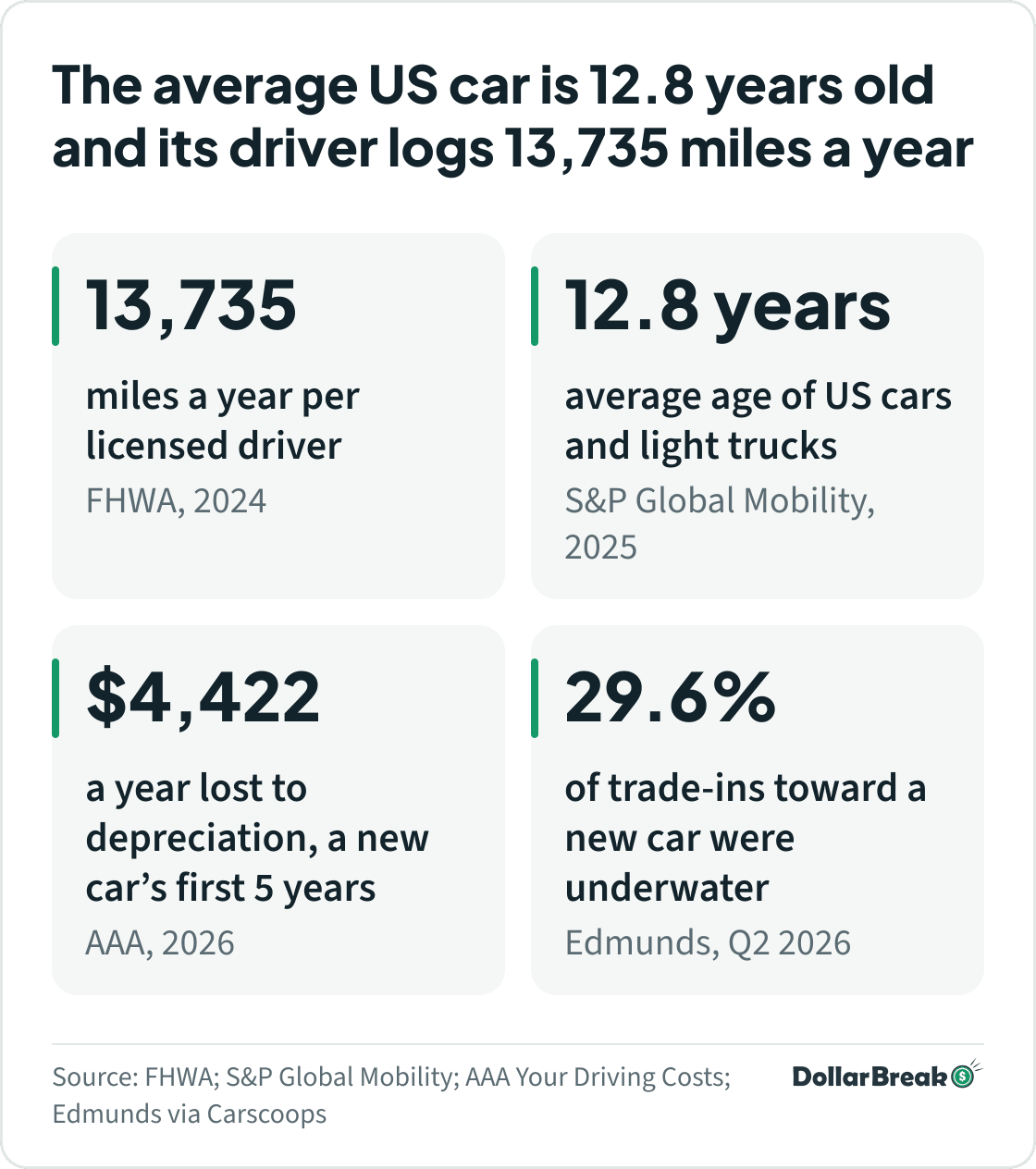
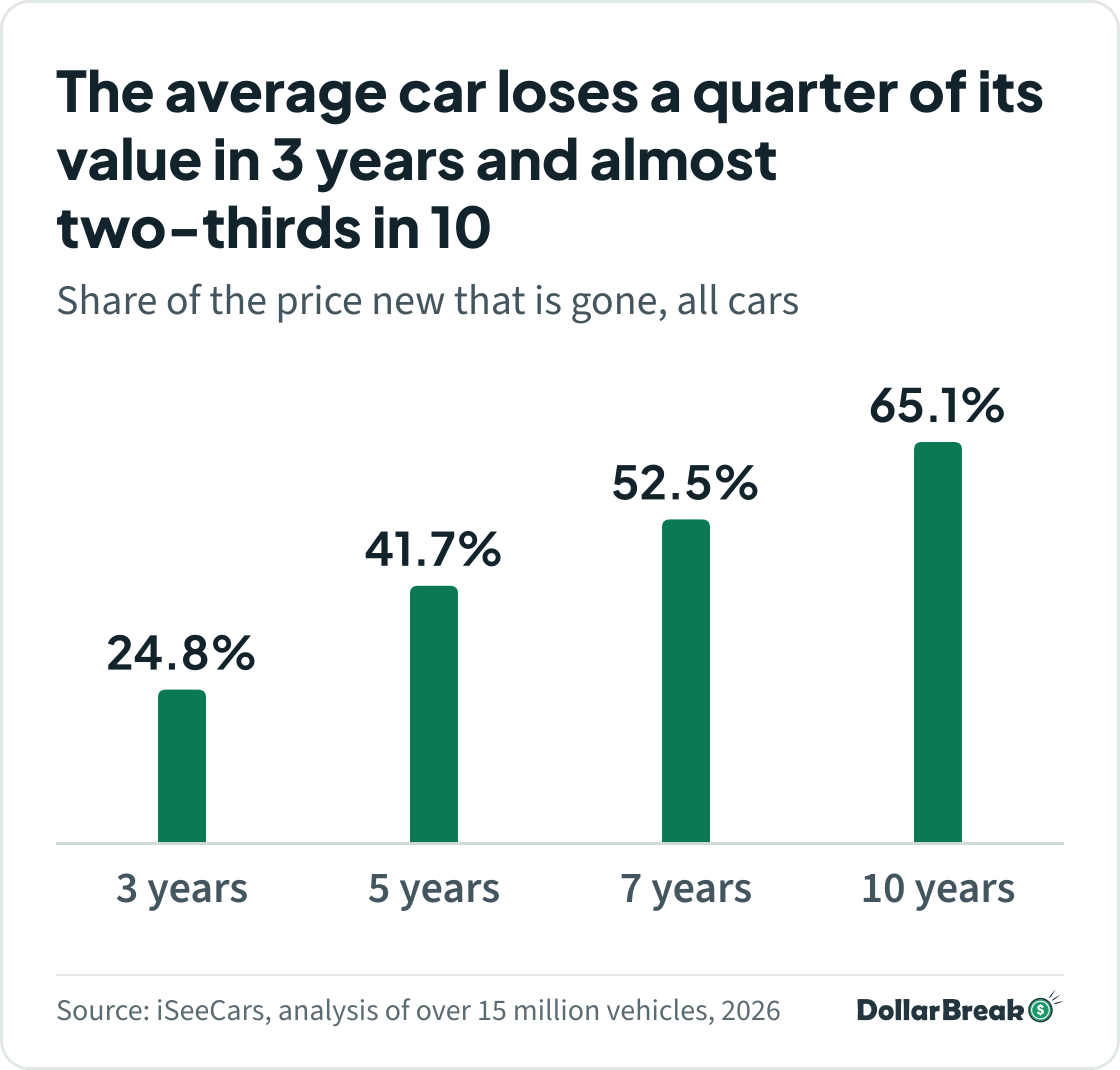
- Depreciation: The average car loses 24.8% of its value in 3 years and 41.7% in 5, by iSeeCars' count of over 15 million vehicles.
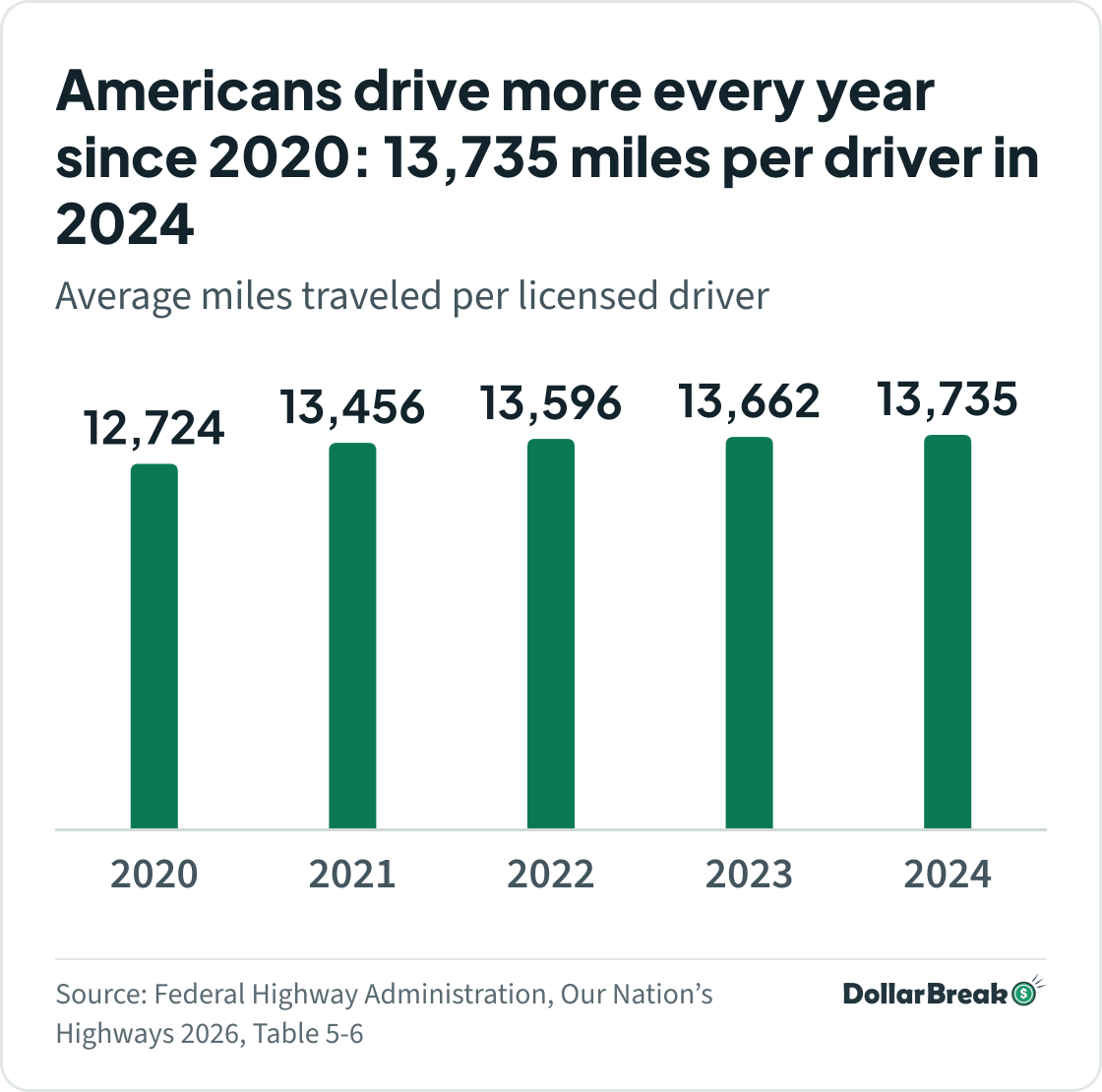
- Miles a year: Licensed drivers averaged 13,735 miles in 2024, so 30,000 miles is about 2 years of driving and 100,000 about 7.
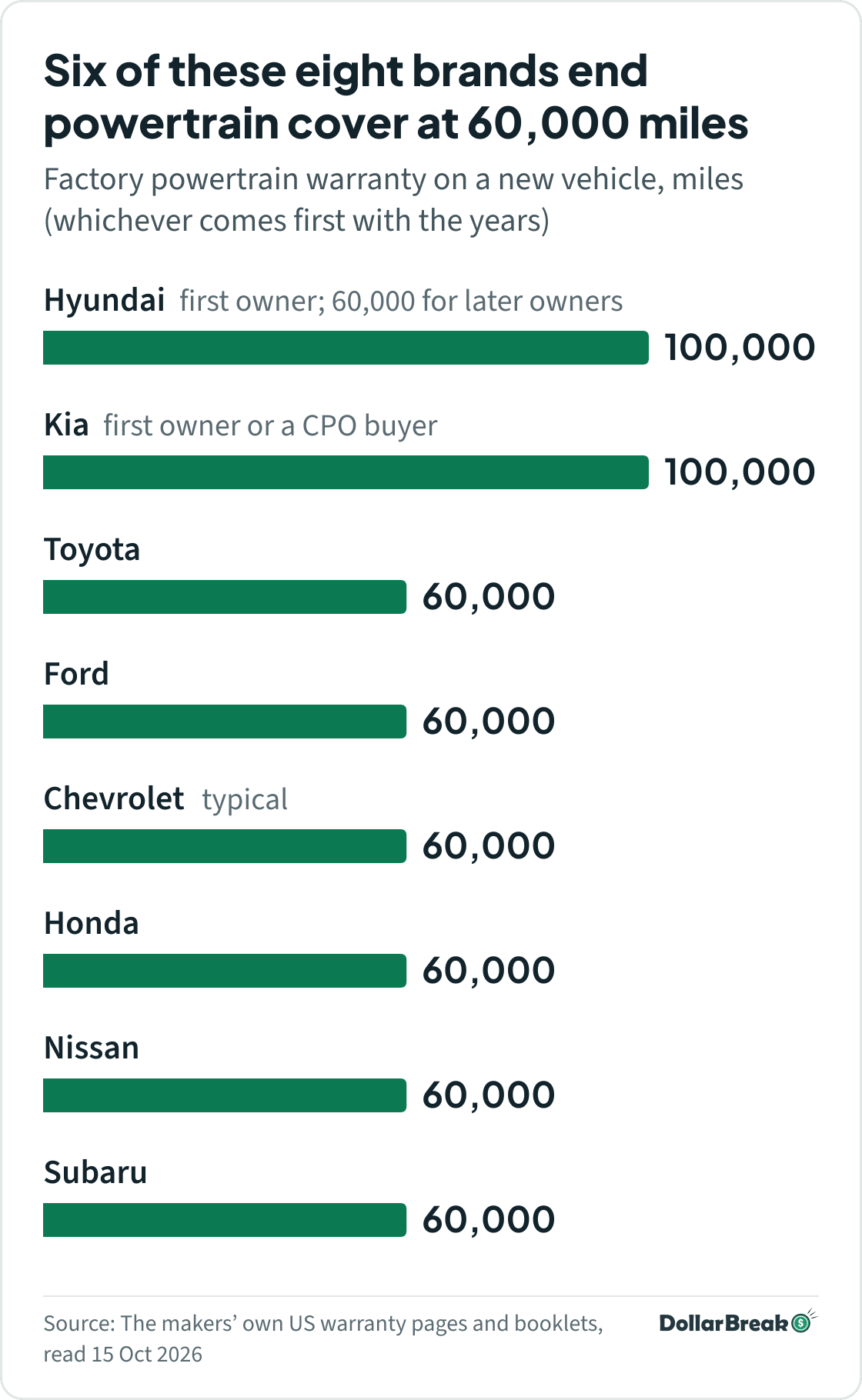
- Warranties: Basic cover usually ends at 3 years or 36,000 miles, and powertrain cover at 5 years or 60,000 miles at six of eight big brands.
- 100,000 miles: A barrier for buyers, not a price cliff: value drops a little with every 10,000 miles, Edmunds finds.
- Loan first: 29.6% of trade-ins toward a new car carried negative equity in Q2 2026, $6,884 on average.
- Season: Shoppers buy most in spring and early summer, when tax refunds arrive; new models land in the fall.
Best Used Car Buyers
Peddle

Trustpilot Rating
Get a legit offer in minutes – provide VIN, mileage and condition
$0 fees + you don’t have to pay for towing – Peddle will take care of it
Get paid in check during the pick up for any car (damaged, junk)
Wheelzy

Trustpilot Rating
Quick car evaluation without the hassle – sell your car within 30 min
Choose a convenient date and time for free pick-up, even tomorrow
Get cash in hand the same day the Wheelzy agent picks up your car
CarBrain

Trustpilot Rating
Get a quote in under 90 seconds, paid in under 48 business hours
Free vehicle towing and no fees to getting rid of your damaged car
The tow truck driver will arrive with your check (continental US)

How Fast a Car Loses Value
Depreciation is how fast a car's value falls, and the rate varies widely by brand and model. A new car loses the most right away: Carfax says cars typically lose more than 10% of their value in the first month after you drive off the lot.
Across all cars, iSeeCars puts the loss at 24.8% after 3 years, 41.7% after 5, 52.5% after 7 and 65.1% after 10, from over 15 million vehicles. Carfax's broad estimates run gentler: about 12.5% in the first year, then roughly 5% a year for the next four. AAA puts a new car's depreciation at a weighted average of $4,422 a year over 5 years and 75,000 miles.
Mileage is the clearest sign of how much wear a car has taken, so it moves the price as much as age does. Few cars last as long as old rules of thumb suggest: iSeeCars gives the average vehicle just a 5.4% chance of reaching 250,000 miles.
Up to 30,000 Miles
Licensed drivers averaged 13,735 miles in 2024, the Federal Highway Administration says, the fourth yearly rise since the 2020 low of 12,724. At that pace, 30,000 miles is a little over 2 years of driving. A car that young still looks fresh to a buyer.
Selling that early is rarely the best money move, because the first years cost the most. Take a $30,000 car on iSeeCars' averages (our arithmetic): it loses $7,440 by year 3, or $2,480 a year, and $12,510 by year 5, or $2,502 a year.
Keep it 7 years and it loses $15,750, or $2,250 a year; keep it 10 and the loss is $19,530, or $1,953 a year. So selling at 3 years costs about the same per year as selling at 5, and every year after that costs less.
30,000 – 60,000 Miles
Under 3 years or 36,000 miles, your car is likely still under the maker's basic warranty, and that cover helps the price. That's the basic term at Toyota, Ford, Chevrolet, Honda, Nissan and Subaru; Kia's runs 5 years or 60,000 miles.
| Brand | Basic warranty | Powertrain warranty |
|---|---|---|
| Toyota | 3 yr / 36,000 mi | 5 yr / 60,000 mi |
| Ford | 3 yr / 36,000 mi | 5 yr / 60,000 mi |
| Chevrolet | 3 yr / 36,000 mi | 5 yr / 60,000 mi (typical) |
| Honda | 3 yr / 36,000 mi | 5 yr / 60,000 mi |
| Nissan | 3 yr / 36,000 mi | 5 yr / 60,000 mi |
| Subaru | 3 yr / 36,000 mi | 5 yr / 60,000 mi |
| Hyundai | not checked | 10 yr / 100,000 mi for the first owner; 5 yr / 60,000 mi after |
| Kia | 5 yr / 60,000 mi | 10 yr / 100,000 mi for the first owner or a CPO buyer |
Around 30,000 miles the first big service comes due. At 30,000 miles or 36 months, Toyota's 2023 Highlander schedule calls for a new engine air filter, cabin air filter, oil and filter. It adds a tire rotation and checks of the brakes, coolant and fuel lines; check your own manual, and keep the receipts, since a full service record helps a buyer trust the car.
Value keeps falling in this stretch, but more slowly. On iSeeCars' averages, a car goes from 24.8% lost at 3 years to 41.7% at 5, about 8.5 points a year (our arithmetic).
The powertrain warranty, which covers the engine and transmission, usually runs to 5 years or 60,000 miles. Sell before then and the buyer gets what's left of it at brands that pass it on, such as Chevrolet, Nissan and Subaru.
60,000 – 100,000 Miles
This is the band where powertrain cover runs out. Toyota, Ford, Honda, Nissan and Subaru end it at 5 years or 60,000 miles, as does Chevrolet's typical warranty. Hyundai's 10 years or 100,000 miles is for the first owner only, with 5 years or 60,000 for later owners, and Kia's 10-year cover is for the first owner or a Certified Pre-Owned buyer.
Past 60,000 miles a car needs more upkeep: brakes, tires and, on engines that have one, the timing belt. Repair bills tend to grow as the car ages, and they come out of your pocket once the warranty has ended.
Wear starts to show at this age, and the model has often been redesigned since you bought it, which makes yours look older to a buyer.
Nearing 100,000 miles, many buyers hesitate. Crossing that mark "may be a psychological barrier for potential buyers," Progressive says, but citing Edmunds it adds that value drops slightly with every 10,000 miles, with no major drop-off at any milestone. So selling at 95,000 rather than 105,000 mainly widens your pool of private buyers.
100,000-200,000 Miles
Cars with 100,000 to 200,000 miles can still be reliable, but they need more maintenance and repairs.
At 13,735 miles a year, 100,000 miles comes at about 7 years. By then the average car keeps 47.5% of its price, and 34.9% at 10 years, on iSeeCars' figures (100% minus 52.5% and 65.1%).
Private buyers approach these cars with caution, which can make selling a car privately slow going.
To sell one faster:
- Get a pre-sale inspection to show buyers the car has no major problems.
- Price it to the market, for its age, mileage and condition.
- Be honest about its history: accidents, maintenance and known issues.
- Be patient: a high-mileage car can take longer to sell, but it can still fetch a fair price.
200,000+ Miles
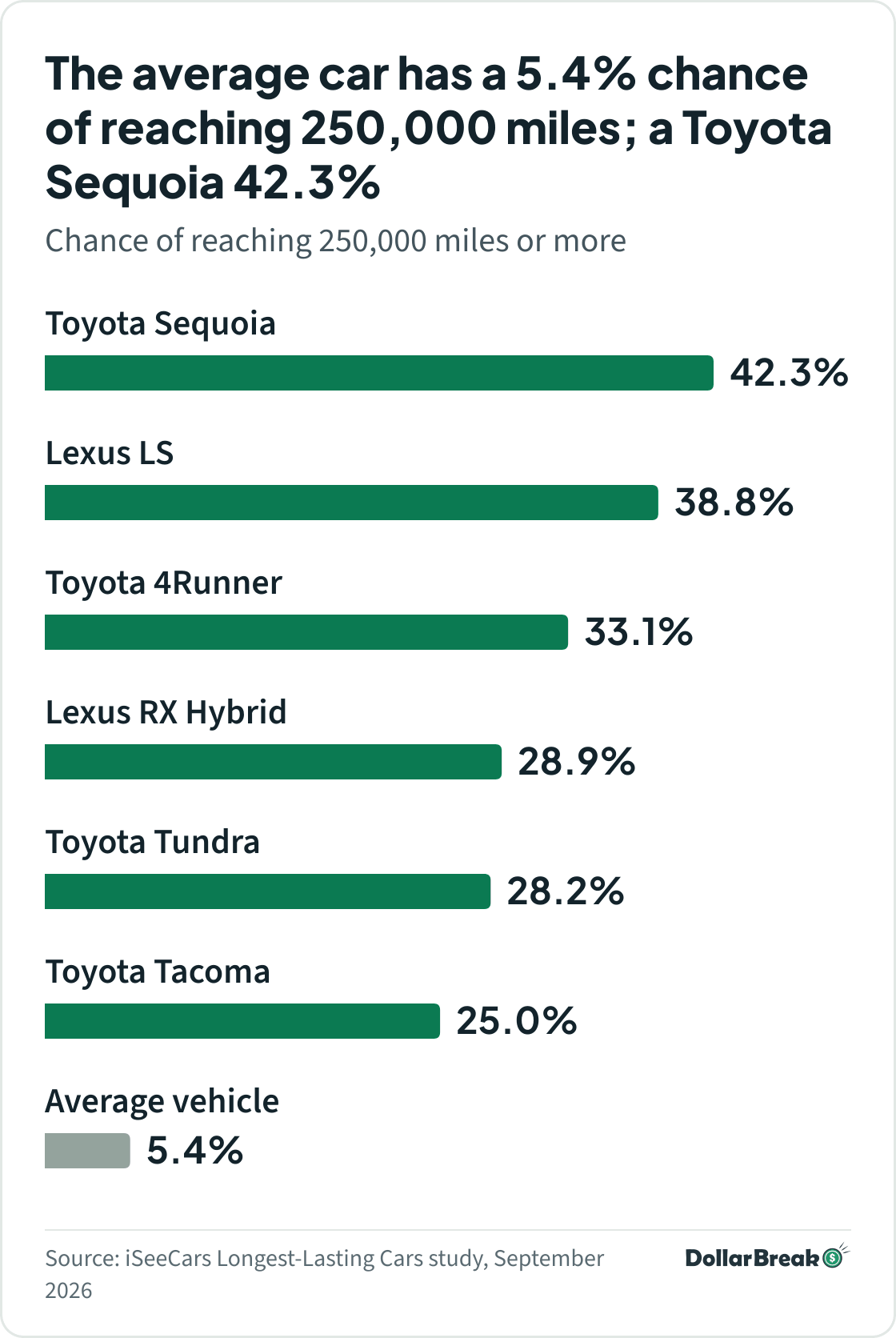
Past 200,000 miles a car counts as high mileage, and it needs steady upkeep and, often, major repairs. Few get further: iSeeCars gives the average vehicle a 5.4% chance of reaching 250,000 miles. The best odds belong to the Toyota Sequoia (42.3%), Lexus LS (38.8%), Toyota 4Runner (33.1%), Lexus RX Hybrid (28.9%), Toyota Tundra (28.2%) and Toyota Tacoma (25.0%).
At 13,735 miles a year, 200,000 miles takes about 14.6 years, older than the average US car or light truck, which S&P Global Mobility put at 12.8 years in 2025. Repairs can soon cost more than the car is worth, so fewer private buyers will take one on.
If you're selling a high-mileage car:
- Expect a modest price, especially if the car isn't in great shape.
- Clean it inside and out, and fix small dents, scratches and paint chips.
- Be open about its history: the mileage, past repairs and any problems it has now.
- Get a pre-sale inspection. A mechanic's report gives buyers confidence.
- Price it against similar cars with high mileage on Kelley Blue Book or Edmunds.
- Get an instant offer. Peddle and CashForCars, in the box above, quote online for cars in any condition and tow for free.
Best Age to Sell a Car?
If you'll sell rather than drive it into the ground, aim for about 3 to 5 years and under 60,000 miles. By then the yearly loss has leveled off, the powertrain warranty usually still runs and you're well short of the 100,000 miles that put buyers off. Past that, each year of keeping the car loses less value, so driving it until repairs outgrow it is often the cheapest plan.
Selling at 1 to 2 years usually loses the most per year: a car loses more than 10% in its first month, Carfax says, and about 12.5% in its first year by its broad estimate. If you're weighing a trade-in instead, see when to trade in your car.
Check your loan before you pick a date. In Q2 2026, 29.6% of trade-ins toward a new car carried negative equity, owing more than the car was worth, Edmunds found (as reported by Carscoops). The average underwater trade-in was $6,884 short, so ask your lender for the payoff amount, then see how to sell a car with a loan.
Sell now
- You'll sell anyway and it's near 60,000 miles or 5 years
- It's past 90,000 miles and you want a private buyer
- Repairs would cost more than the car is worth
Keep driving
- It's under 2 years old: the first years cost the most
- You owe more on the loan than it's worth
- It's paid off and reliable: each extra year loses less value
Bottom line: Keeping a car longer costs less per year. If you're selling, sell before 60,000 miles or 5 years, and before 100,000 if you want a private buyer.
Best Time of the Year to Sell a Car
Shoppers often buy in spring and early summer, when tax refunds arrive, Progressive says. Dealer prices point the same way: Cox Automotive says Manheim wholesale prices typically peak at the end of March, and it called September 2026 "the weakest season for wholesale valuations". Those are prices dealers pay each other, not what a private buyer pays you.
New models usually arrive in the fall, so selling earlier in the year keeps you ahead of them.
Best seasons by type of car, per Progressive:
- Spring and summer: sports cars and convertibles
- Fall and winter: four-wheel-drive and all-wheel-drive vehicles
Selling a Car by Mileage: FAQ
At what mileage is it best to sell a car?
If you'll sell rather than keep it for good, before about 60,000 miles, while most makers' powertrain warranty still runs, and before 100,000 if you want a private buyer. There's no mileage where the price falls off a cliff: Edmunds finds value drops slightly every 10,000 miles.
Is 50,000 miles on a 2-year-old car bad?
It's high: at the 13,735-mile average, a 2-year-old car would have about 27,500 miles. At 50,000 it's past the 36,000-mile basic warranty most brands give, though a 5-year or 60,000-mile powertrain warranty still runs.
What is too high mileage for a used car?
There's no single number: value drops a little every 10,000 miles with no major drop-off at 100,000, Edmunds finds, though many buyers balk there. Few cars reach 250,000 miles; iSeeCars puts the average car's chance at 5.4%.
Should I sell my car before 100,000 miles?
If you want a private buyer, yes: 100,000 miles can be a psychological barrier, Progressive says. If you'll keep driving it, there's no price cliff to beat, and each extra year loses less value.
How do I sell a car with over 200,000 miles?
Price it on Kelley Blue Book or Edmunds, show the service records and a pre-sale inspection, and expect a modest price. Instant-offer buyers such as Peddle and CashForCars quote for cars in any condition and tow for free; our guide to selling a car with over 200k miles has the steps.