Six moments make it the right time to trade in your car, from mileage and warranty to equity and the season. Each comes with the numbers behind it, followed by how a trade-in works, what the deal really costs, and the online buyers that pay you outright instead.
Key takeaways
- No 100,000-mile cliff: value slips a little with every 10,000 miles; age costs more, 41.7% of value gone in 5 years.
- Warranty: most brands cover the powertrain for 5 years or 60,000 miles, and the cover passes to the next owner.
- Equity first: 29.6% of trade-ins toward a new car were underwater in mid-2026, by $6,884 on average.
- Season: wholesale prices typically peak at the end of March; autumn is the weakest season.
- The whole deal: in many states you pay sales tax only on the difference (not in California), and doc fees run $85 to $280 where capped.
- Trade-in vs selling: only 34% of trade-in sellers were satisfied, against 62% who took an instant cash offer.
Best Used Car Buyers
Peddle

Trustpilot Rating
Get a legit offer in minutes – provide VIN, mileage and condition
$0 fees + you don’t have to pay for towing – Peddle will take care of it
Get paid in check during the pick up for any car (damaged, junk)
Wheelzy

Trustpilot Rating
Quick car evaluation without the hassle – sell your car within 30 min
Choose a convenient date and time for free pick-up, even tomorrow
Get cash in hand the same day the Wheelzy agent picks up your car
CarBrain

Trustpilot Rating
Get a quote in under 90 seconds, paid in under 48 business hours
Free vehicle towing and no fees to getting rid of your damaged car
The tow truck driver will arrive with your check (continental US)

1. Before the Mileage Exceeds 100,000 Miles
A car with fewer miles is usually worth more, because buyers presume it has more life left. But Edmunds' data, as Progressive reports it, shows value falling a little with every 10,000 miles, with no major drop-off at any one milestone.
Crossing 100,000 miles may still be a psychological barrier for buyers, so a car just under it can be easier to sell. Age costs more than any milestone: across more than 15 million vehicles, iSeeCars found the average car loses 24.8% of its value in 3 years, 41.7% in 5, 52.5% in 7 and 65.1% in 10.
Already past 100,000? There is no cliff left to beat, so let repair bills and your needs decide (sections 3 and 6). Our guide to what mileage means for selling a car goes deeper.
2. Before the Factory Warranties Expire
Once the factory warranty runs out, every repair is yours to pay. Most brands cover the powertrain for 5 years or 60,000 miles; Toyota and Nissan cover the rest of the car for 3 years or 36,000 miles, and Kia for 5 years or 60,000.
At Subaru, Chevrolet and Nissan the warranty passes to every later owner within its period, so a car still under it is worth more to the next buyer. Hyundai is the exception: its 10-year/100,000-mile powertrain cover drops to 5 years/60,000 miles for later owners, and Kia's 10-year cover holds only for the first owner and Certified Pre-Owned buyers.
| Brand | Powertrain warranty |
|---|---|
| Toyota | 5 years / 60,000 miles |
| Ford | 5 years / 60,000 miles |
| Chevrolet | 5 years / 60,000 miles (typical) |
| Honda | 5 years / 60,000 miles |
| Nissan | 5 years / 60,000 miles |
| Subaru | 5 years / 60,000 miles |
| Hyundai | 10 years / 100,000 miles for the first owner; 5 years / 60,000 miles after |
| Kia | 10 years / 100,000 miles for the first owner and Certified Pre-Owned buyers |
3. Before The Car Begins To Have Frequent Repairs
Experian's rule of thumb keeps your total transportation costs at or under 10% to 15% of your monthly net income. For scale, AAA puts the cost of owning a new car at $12,863 a year in 2026, including $4,422 a year of depreciation.
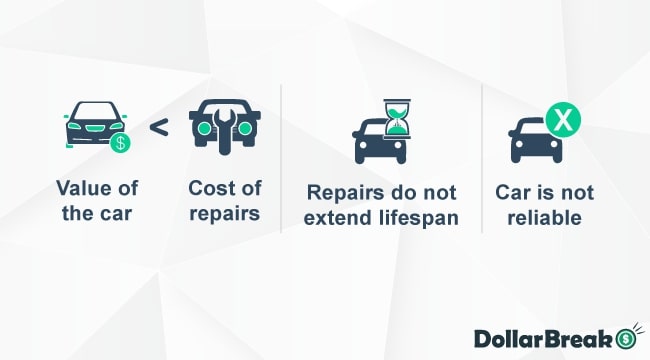
Add up what you spend on repairs each month, and trade in the car if:
- Your total car costs top 10% to 15% of your net income, and repairs make up most of it.
- A year of repair bills costs more than the car is worth.
For example: if your car is worth $5,000 and you spend $500 a month fixing it ($6,000 a year), trading it in for a newer car is the better deal.
4. When You Have Equity In Your Car
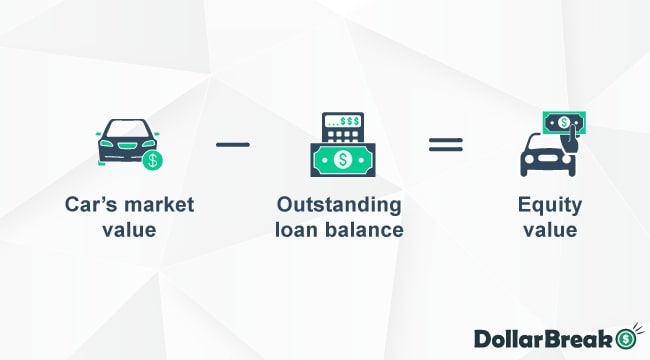
If you have a loan, find out first whether you have positive or negative equity. Ask the lender for the payoff amount, not the balance: it includes interest up to the payoff date.
How to calculate equity:
Equity = Car’s Market Value – Outstanding Loan Balance
If the number is positive, the car is worth more than you owe, and the difference goes toward your next car. You can trade in a car you still owe on; the dealer pays off the loan as part of the deal.
If it is negative, you are underwater: you owe more than the car is worth. You can pay the gap in cash, or the dealer or lender may roll it into the new loan, which the CFPB warns makes that loan more expensive.
You would not be alone. Edmunds found that 29.6% of trade-ins toward a new car carried negative equity in the second quarter of 2026, by $6,884 on average, and those buyers pay $944 a month, $167 more than the average buyer.
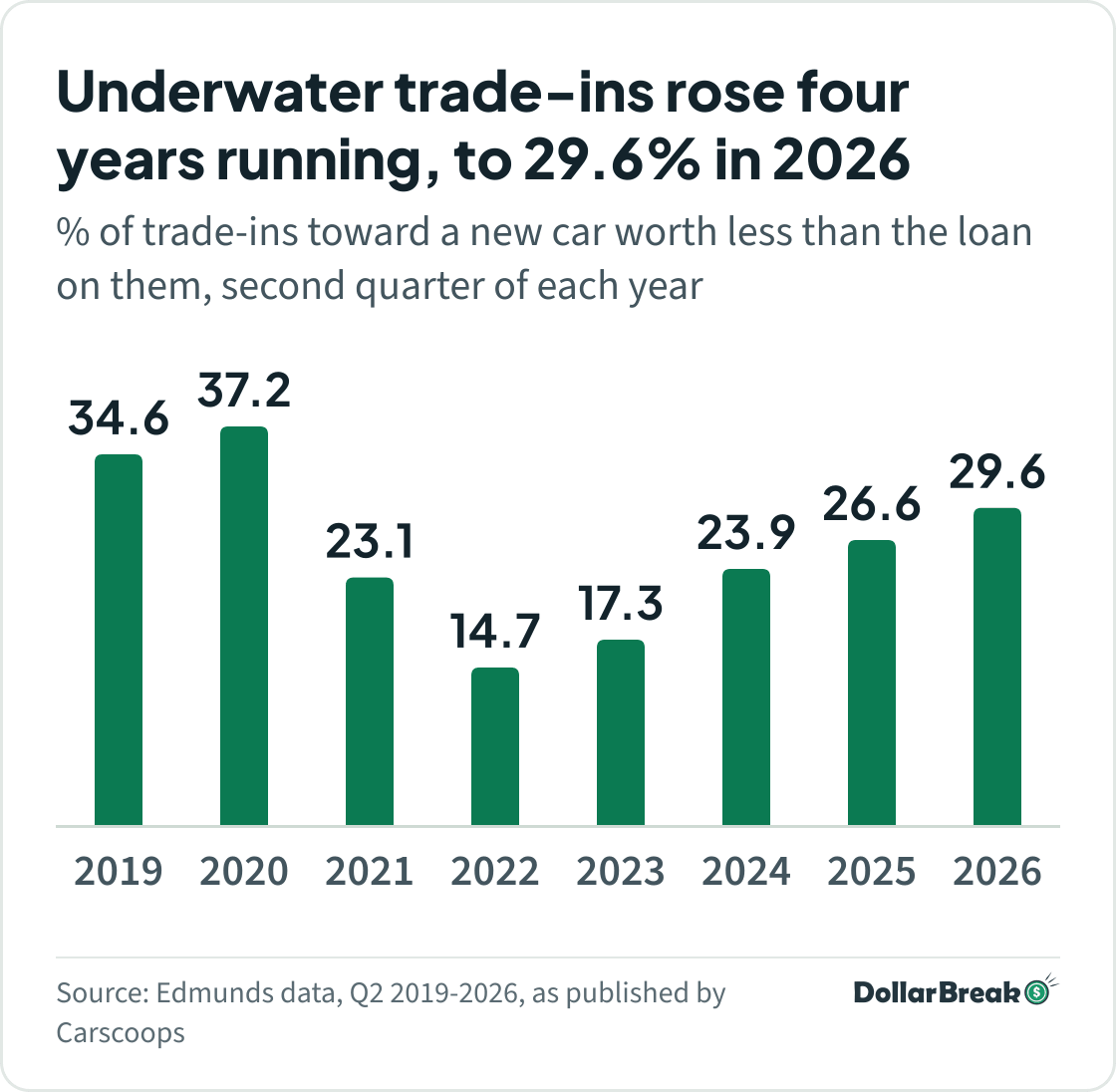
Bottom line: trade in with positive equity; with negative equity, pay the gap in cash or keep paying the loan down before you trade.
5. When the Market Conditions Are Favorable
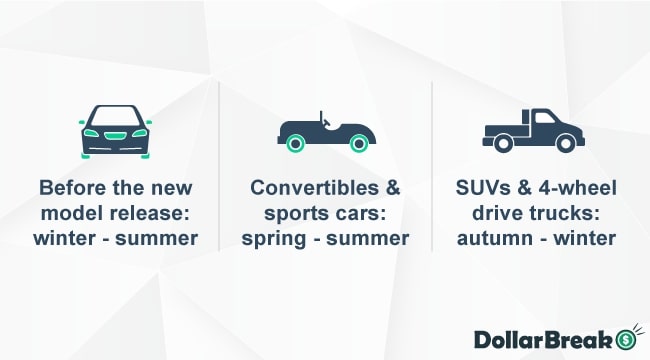
Wholesale used-car prices follow the calendar. Cox Automotive says wholesale prices typically peak at the end of March, in a spring selling season fueled by tax refunds, and it called autumn "the weakest season for wholesale valuations" in September 2026.
New models usually arrive in the fall, one more reason not to wait for autumn. Prices are flat for now: Manheim's used-vehicle index stood at 205.9 in September 2026, 0.6% below a year earlier, and Cox forecasts it will end 2026 up about 0.8%. The average used car was listed at $27,239 in August 2026.
Best season by type of car:
- Sports cars and convertibles: spring and summer
- Four-wheel and all-wheel drive cars: fall and winter
6. When Your Lifestyle Changes
Maybe you bought a compact car for city driving, and now you have a family and need room for car seats and strollers. Trading it for an SUV or minivan may be the right move.
Or it works the other way: you moved closer to work or changed jobs, drive less, and would rather have a smaller car that uses less fuel.
Or your car lacks safety features you want. IIHS found automatic emergency braking cut rear-end crashes by 50%, and NHTSA's rule, as published, requires it on new cars and light trucks by September 2029.
Even if the offer for your car is not the highest, the space, fuel savings or safety you gain can be worth more than the difference.
How Does Trading In Work?
A trade-in means handing your car to the dealer as part of the payment for your next one, new or used.
It is quick: in many cases, Car and Driver says, you arrive in one car and leave in another in under a couple of hours. How long it takes depends on:
- How busy the dealership is
- How much demand there is for your car
- Your car's condition
- Whether you bring the paperwork: CarMax, for one, asks for the title or loan payoff information, every titleholder, and a state photo ID for each
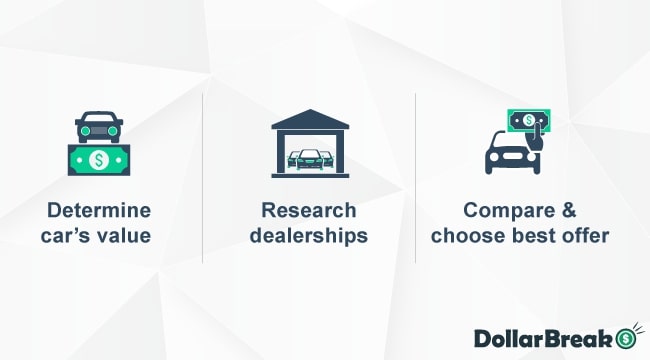
Determine Your Car’s Value
Knowing your car's value before you negotiate gives you leverage and tells you whether an offer is fair.
Start with the free Kelley Blue Book value tool. You enter the year, make, model and mileage, confirm your ZIP code, and pick the car's condition.
KBB's Trade-in Range is what you can reasonably expect from a dealer, and it presumes you buy your next car there. Be honest about condition: KBB says most cars it sees are in "Good" condition, and most people overestimate theirs.
KBB's Instant Cash Offer is a real offer, valid 7 days (not counting Sundays), redeemed at a participating dealer after an inspection; KBB never buys the car itself. Dealers can lower it after that inspection, and on Trustpilot, 4 of the 19 newest KBB reviews (April to October 2026) say a dealer cut the offer or would not honor it.

KBB Summary
- Provides an Instant Cash Offer
- Helps to determine your car’s value
- It’s free to use the KBB valuation tool
- Check your car for any recalls
Research Dealerships
Offers can differ a lot from one dealer to the next, so get more than one.
Reputation
Read a dealer's reviews and ratings before you go. Many complaints about trade-ins or customer service are a reason to go elsewhere.
Competition
Get quotes from several dealers and online buyers: KBB's advice, whether you sell or trade in, is to get multiple offers before accepting one. One dealer's bid is your best argument with the next.
Compare and Choose Offer
Compare the whole deal, not just the trade-in figure:
- The price of the car you are buying
- The trade-in value of your car
- The financing terms
- Sales tax: in many states you pay it only on the difference, but California taxes the full price, Michigan caps the credit at $12,000, and Florida gives it only when the trade is part of the same sale
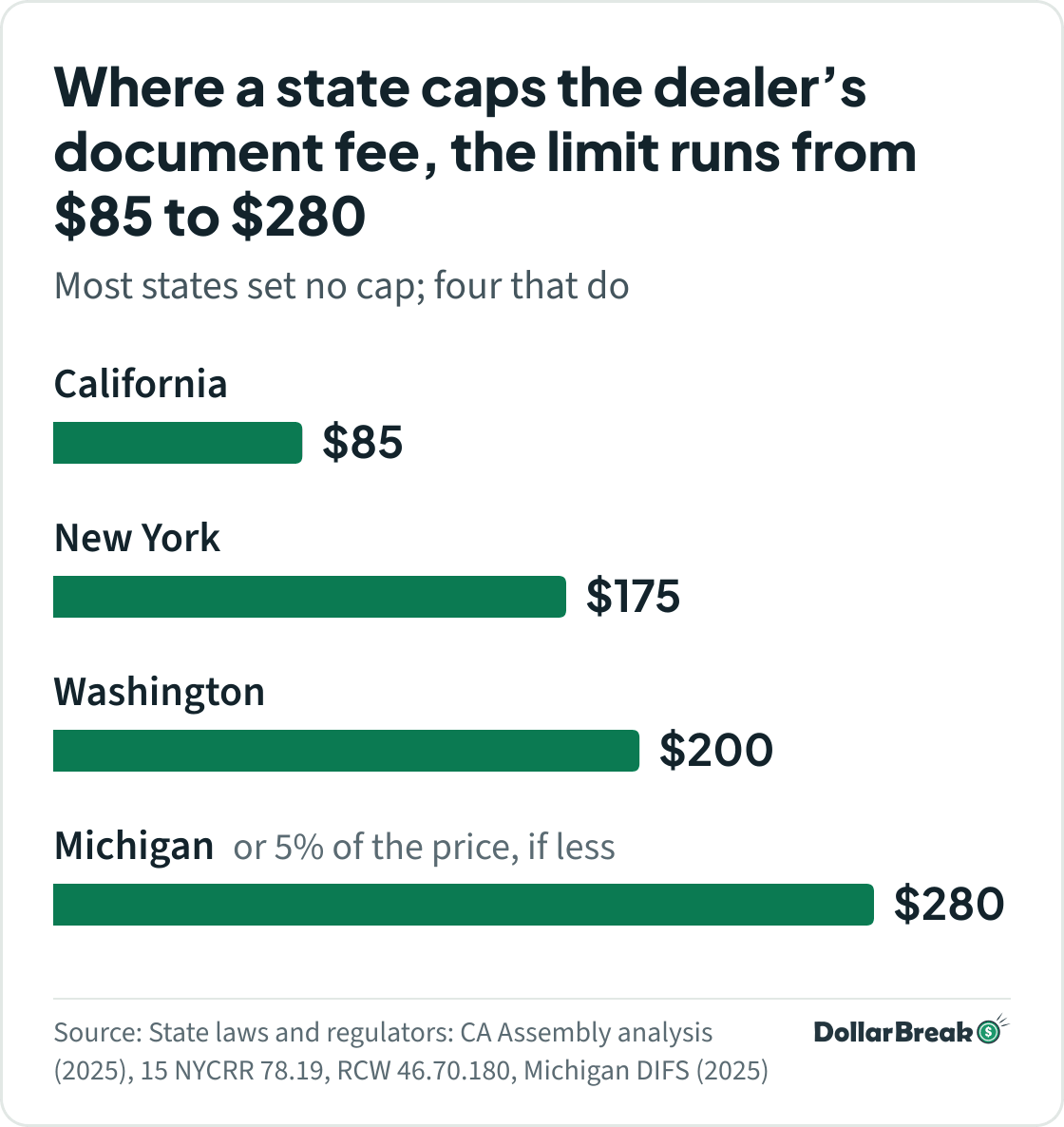
- The document fee: most states set no cap; where they do, it is $85 in California, $175 in New York, $200 in Washington and $280 (or 5% of the price, if less) in Michigan
- The payoff on your old loan, which includes interest up to the payoff date
Trade-in Example:
Say you plan to trade in a well-kept Honda Accord for a Toyota Camry.
Dealership A:
1. Offers to buy your Honda Accord for $16,000
2. Offers to sell you Toyota Camry for $24,000 with 6% APR for a five-year term.
3. Net Cost: $24,000 – $16,000 = $8,000
4. Total Cost: $9,280 (interest included)
Dealership B:
1. Offers to buy your Honda Accord for $15,000
2. Offers to sell you Toyota Camry for $24,000 with 3% APR for a five-year term.
3. Net Cost: $24,000 – $15,000 = $9,000
4. Total Cost: $9,703 (interest included)
Dealership B's rate is half of A's, so it looks cheaper. But Dealership A wins by $423, because its higher trade-in value outweighs the higher interest rate.
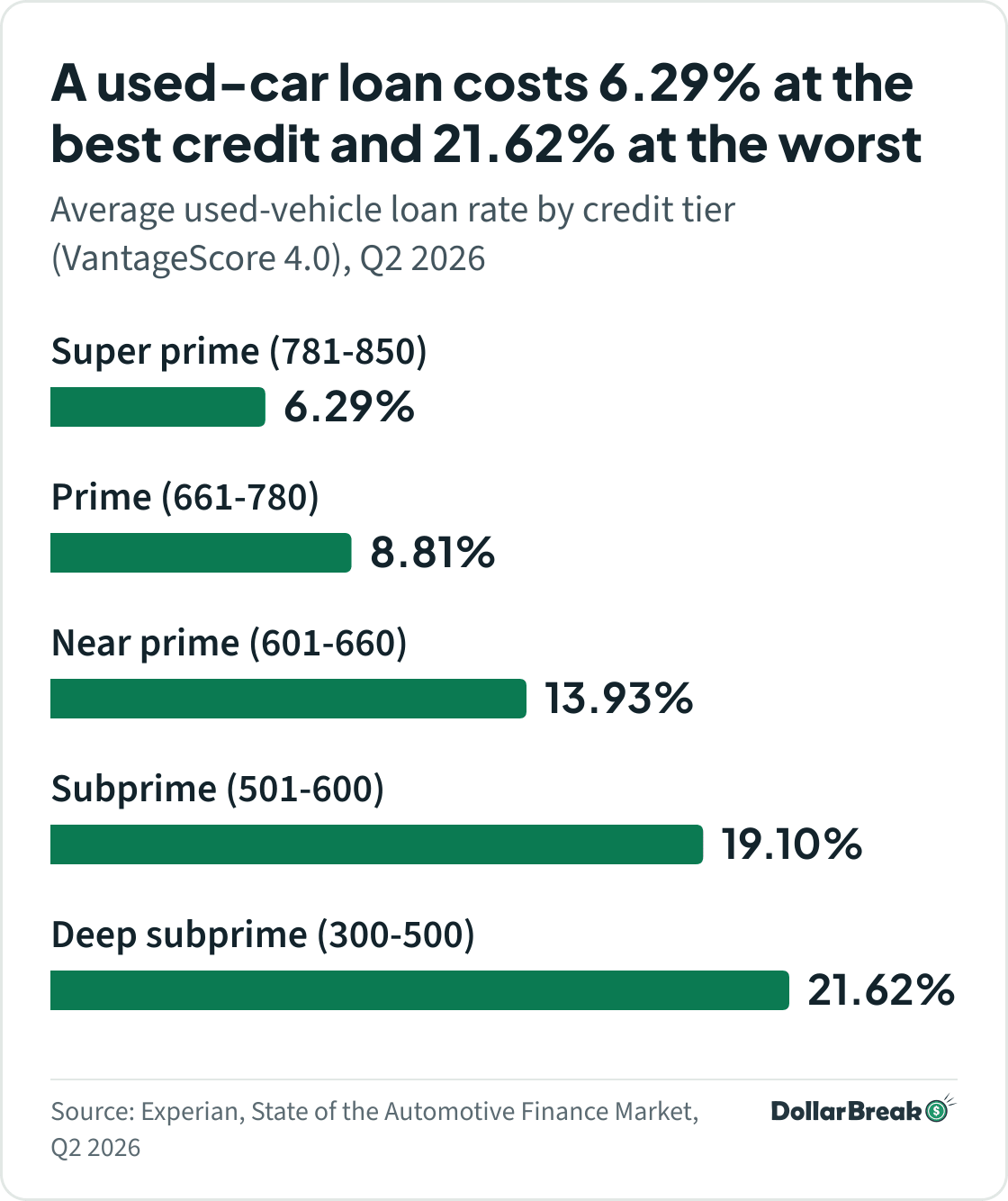
The example's 6% is close to the 6.35% average on a new-car loan (Experian, Q2 2026). On a used car, your credit decides far more: the average rate ran from 6.29% for super prime borrowers to 8.81% prime, 13.93% near prime, 19.10% subprime and 21.62% deep subprime, 11.19% across all.
Bottom line: judge a trade-in by the total cost of the deal, not by the trade-in figure or the rate alone.

Best Online Places to Trade In or Sell Your Car
A local dealer is fast and easy, but it rarely pays the most. KBB says selling privately usually brings the most money, while selling or trading to a dealer is faster and easier; here is how to sell a car privately.
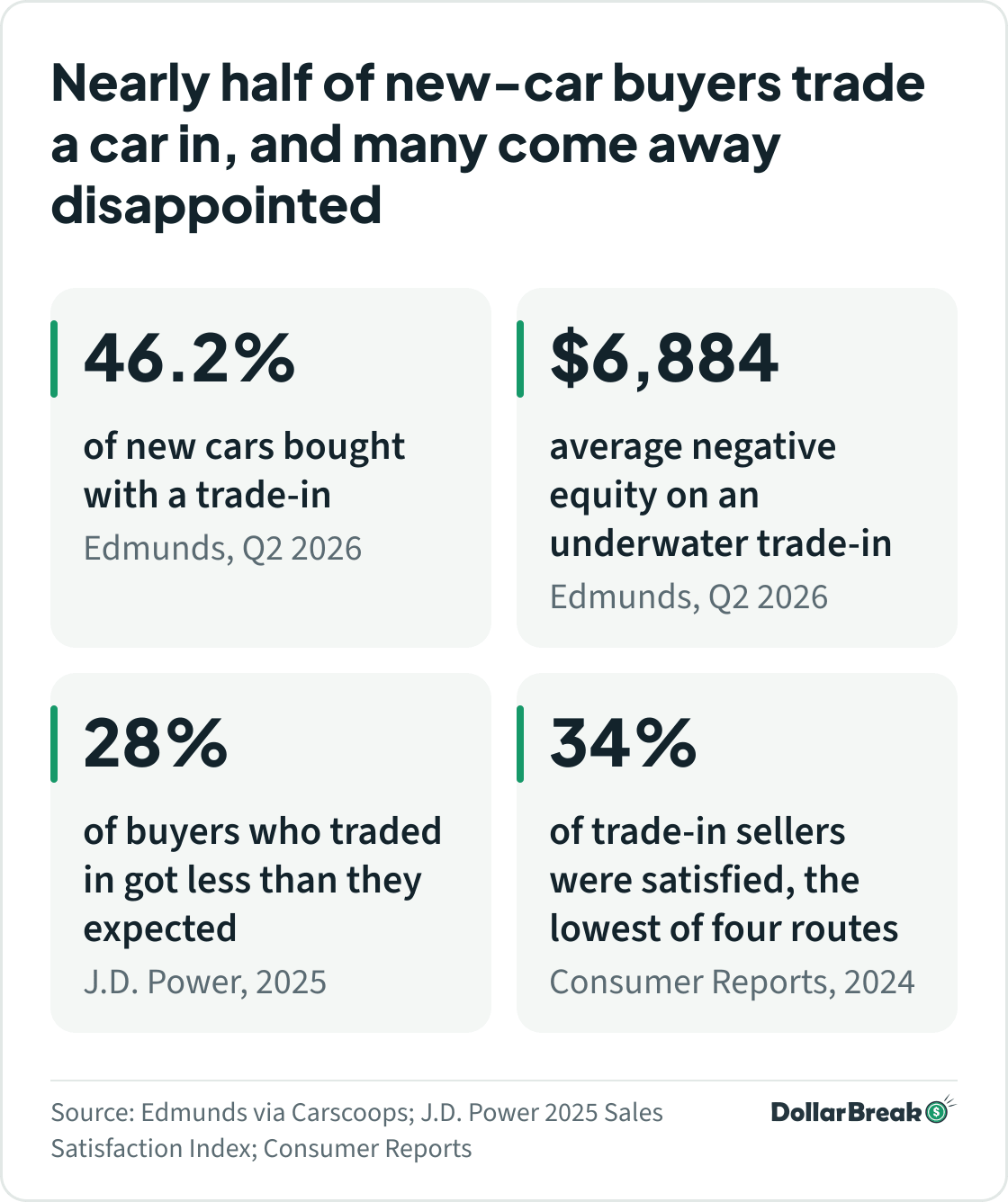
Nearly half of new-car buyers trade a car in (46.2% in Q2 2026, Edmunds), and many come away disappointed. In a Consumer Reports survey of more than 14,000 members, 62% were satisfied with an instant cash offer, 58% with a private sale, 51% with a sale to a dealer and only 34% with a trade-in. In J.D. Power's 2025 study, 28% of buyers who traded in said they got less than they expected.
Peddle is not a trade-in: it buys your car outright, and you put the money toward the next one. You get an offer in seconds, a carrier calls within 1 business day, pickup is typically 24 to 48 hours after you schedule it, and you are paid by check at pickup.
Carvana does both online: it takes your car as a trade-in or buys it outright, and its offer is valid for 7 days. CarMax pays the same price whether you sell outright or trade in; see how the two compare in Carvana vs CarMax.
Peddle Summary
- Sell used, damaged or junk car nationwide
- Free towing, scheduled within 1 business day
- Receive payment upon car collection
- Get free online quote – offer in seconds
- Instant quote available on (855) 925 4302
- No obligation to accept the offer
Bottom line: get an online offer and a KBB Instant Cash Offer before you visit a dealer, so you know what your car fetches outright.
Pros and Cons of Car Trade In
| Advantages | Disadvantages |
|---|---|
| Buy and sell in one visit | Pays less than a private sale |
| Quick paperwork process | Takes some negotiating |
| Lower sales tax in many states (not California) | Cleaning and detailing the car |
| You can trade in a car you still owe on | Time spent visiting several dealers |
| The trade-in value comes off the price you finance | Some cars are refused: KBB's offer excludes salvage titles and cars past 300,000 miles |
Trade in when
- You have positive equity
- The car is still under its powertrain warranty
- You want one visit and one deal, ideally in spring
- Your state taxes only the difference
Wait or sell instead when
- You owe more than the car is worth
- You want top dollar: a private sale usually pays more
- You bought the car within the last year
People Also Asked
Do you lose a lot of money trading in a car?
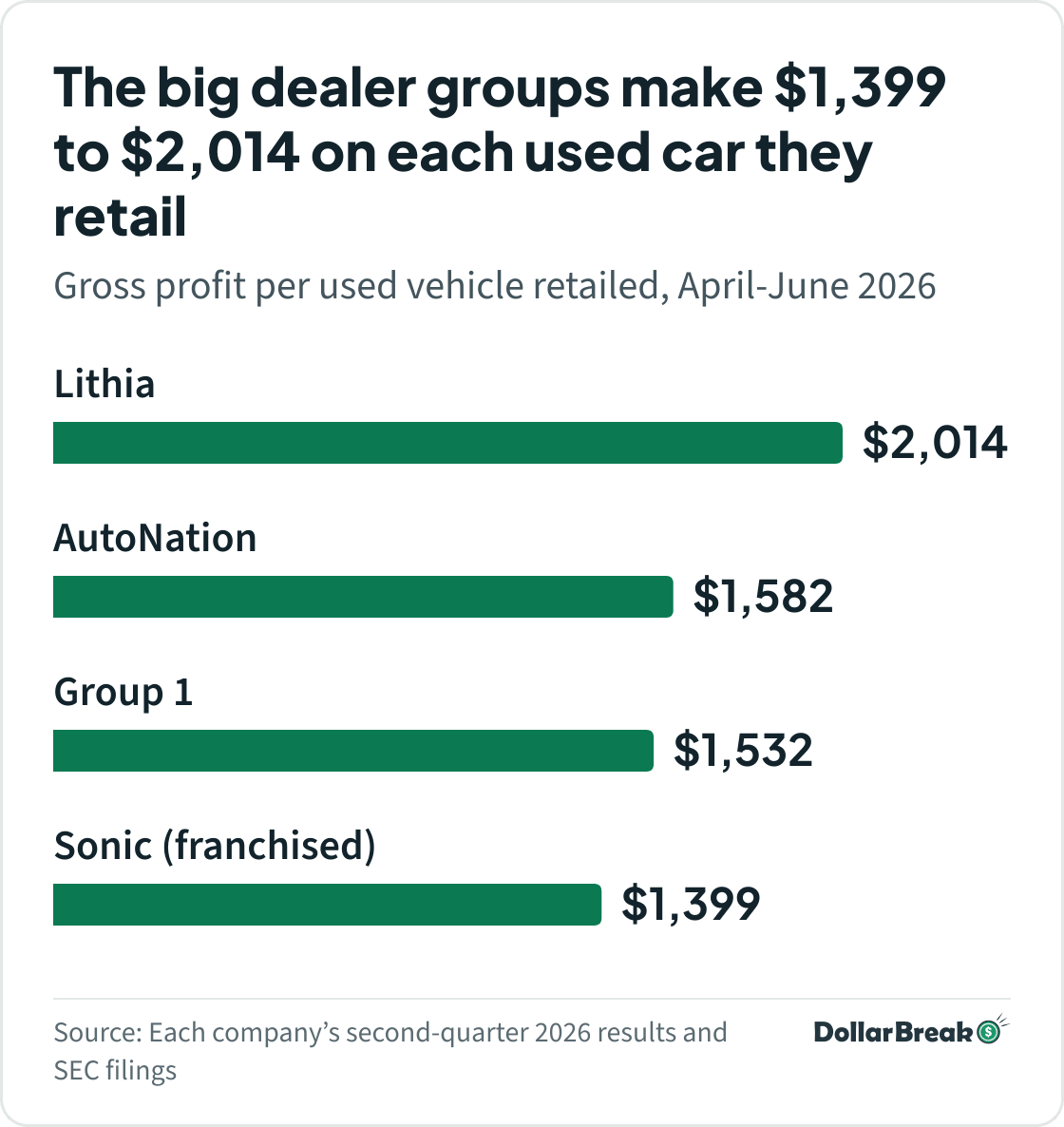
Usually some. KBB's Trade-in Value is lower than its Private Party Value because the dealer has to pay to recondition and resell the car. The big dealer groups made a gross profit of $1,399 to $2,014 on each used car they retailed in April to June 2026 (Lithia $2,014, AutoNation $1,582, Group 1 $1,532, Sonic $1,399).
How much you lose depends on:
- Your car's make, model and year
- Its mileage and condition
- Demand for it
- The price of the car you are buying
- The terms of the deal
Can I trade in a car with problems?
Yes. No law stops you, but mechanical problems lower the offer.
The dealer inspects and test-drives the car itself and may lower an offer after the inspection, so answer its questions truthfully.
Can I trade in a car I just bought?
Yes. There is no waiting period, even at 10,000 miles or within a month, but it usually costs you.
Carfax says a new car typically loses more than 10% of its value in the first month and about 12.5% in its first year, so you may well owe more than the car is worth.
Will trading in my car hurt my credit?
Usually only a little. Paying off the old loan closes that account, which Experian says can cause a small, temporary dip in your score.
The bigger risk is a dealer that never pays off the old loan. California, New York and Illinois give the dealer 21 calendar days, and the CFPB suggests checking about a week after the deal that the old loan was paid in full.
It does happen: in 2009 the Illinois Attorney General sued South Holland Mitsubishi, alleging it left nearly $120,000 of loans on traded-in cars unpaid while their owners kept paying for cars they no longer had.
Is it better to clean your car before trading it in?
Dealers usually clean the car themselves before they sell it.
Still, a wash, a clean interior and a few small fixes help the car look its best at the appraisal, and you might get a better offer.
What affects car trade-in value?
- Car’s make, model and age
- Car’s mileage and condition
- Maintenance history
- Equipment
- Current demand
- Accident history
What if my trade-in is worth more than the new car?
The dealer pays you the difference. CarMax, for one, pays by bank draft, a type of check you deposit.
How long should I keep a car?
There is no set term. Edmunds' data puts the average trade-in toward a new car at 4.0 years old in mid-2026. The warranties give natural checkpoints: 3 years or 36,000 miles for Toyota's and Nissan's basic cover, 5 years or 60,000 miles for most powertrains.
What is the 20/3/8 rule for buying a car?
No lender or regulator we checked publishes a 20/3/8 rule. Experian's version is 20/4/10: put at least 20% down, borrow for four years or less, and keep transportation costs at or under 10% to 15% of net income. Real loans run longer: 69.5 months on a new car and 67.9 on a used one (Experian, Q2 2026).
What happens to trade-in cars?
The dealer reconditions and resells them, which is why KBB's trade-in value sits below its private party value. Cars that miss a retailer's standards go to auction: CarMax sold 538,203 cars at its own auctions in fiscal 2026, against 780,684 it retailed.