
Below are the seven steps to sell a car to a dealer, from the first valuation to the DMV notice. After them: which states cut your sales tax on a trade-in, what happens when you still owe money on the car, and what dealers pay for used cars now.
Key takeaways
- Get a floor first: Kelley Blue Book's Instant Cash Offer and CarMax's appraisal are free, and each offer holds for 7 days.
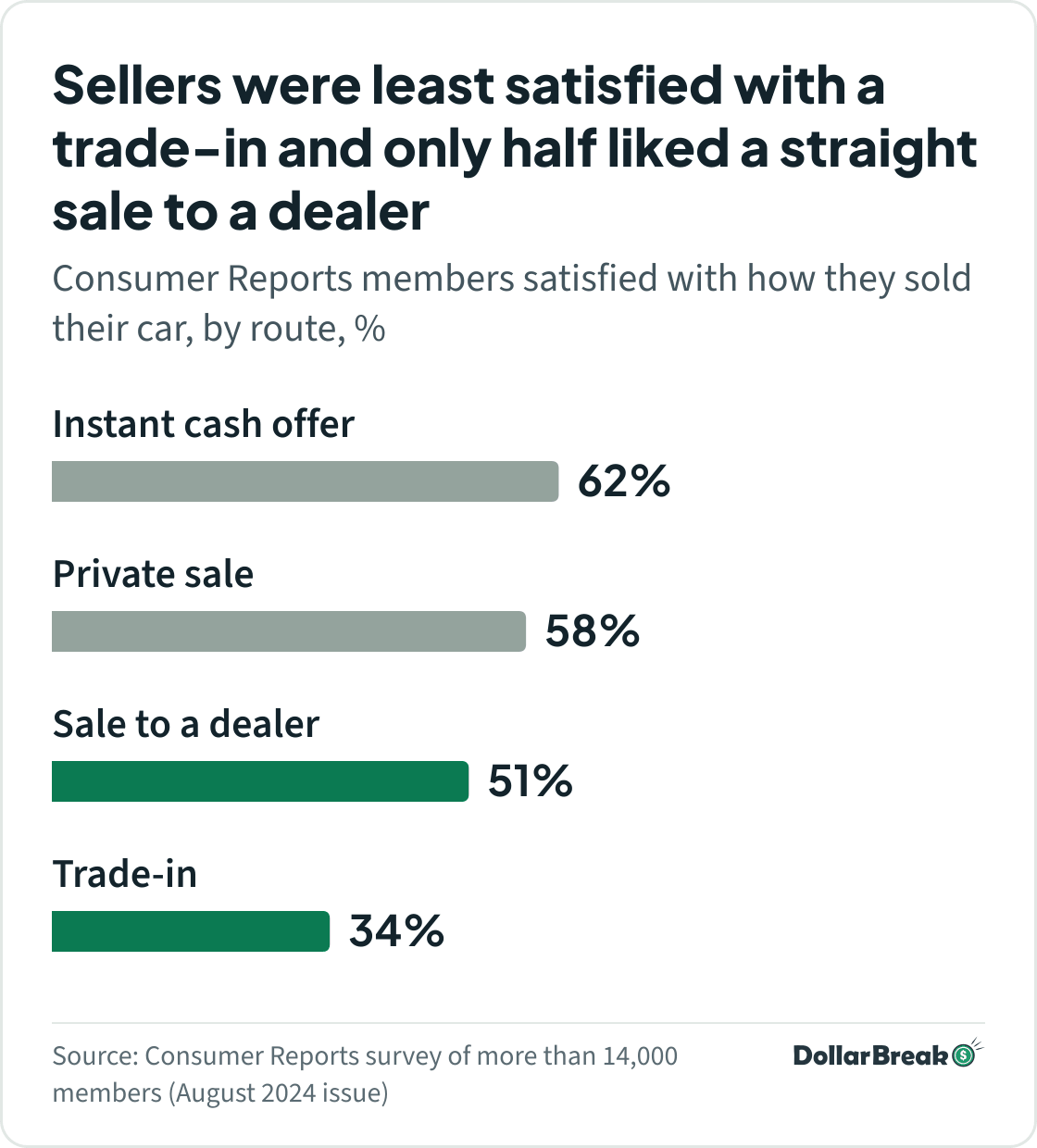
- Expect less than a private sale: only 34% of Consumer Reports members were satisfied with a trade-in, against 62% with an instant cash offer.
- The tax credit depends on your state: Washington deducts a trade-in from the taxable price and Michigan up to $12,000; California and Virginia give no credit.
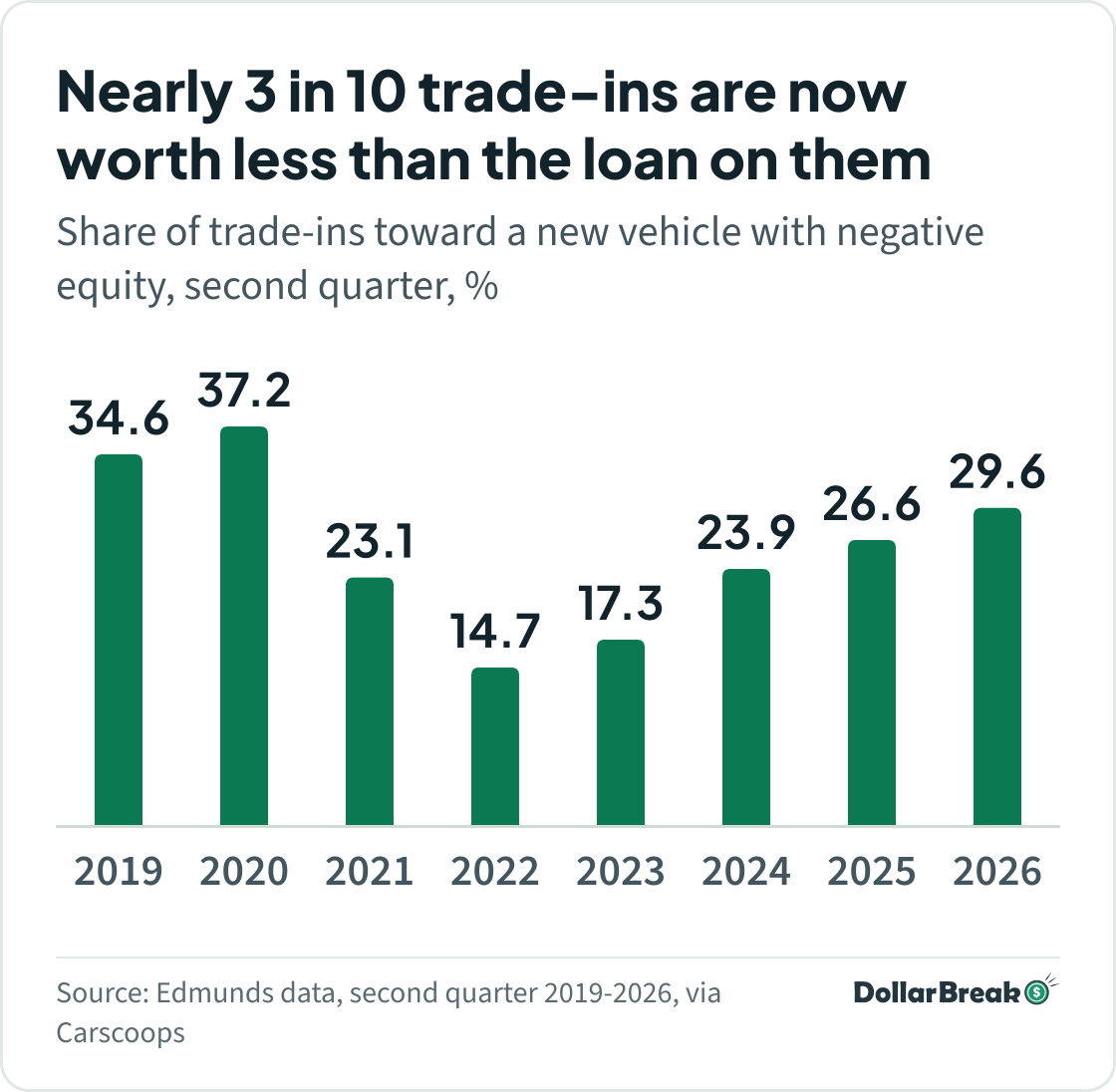
- Know your loan payoff: 29.6% of trade-ins were worth less than the loan on them in the second quarter of 2026.
- Tell the DMV yourself: deadlines run from 5 days in California to 30 in Texas and Missouri.
Best Used Car Buyers
Peddle

Trustpilot Rating
Get a legit offer in minutes – provide VIN, mileage and condition
$0 fees + you don’t have to pay for towing – Peddle will take care of it
Get paid in check during the pick up for any car (damaged, junk)
Wheelzy

Trustpilot Rating
Quick car evaluation without the hassle – sell your car within 30 min
Choose a convenient date and time for free pick-up, even tomorrow
Get cash in hand the same day the Wheelzy agent picks up your car
CarBrain

Trustpilot Rating
Get an offer within 2 minutes and sell your car within 24 hours
Free vehicle towing and no fees to getting rid of your damaged car
The tow truck driver will arrive with your check (nationwide service)

How to Sell a Car to a Dealer:
1. Find Out Your Car’s Value
Start with the Kelley Blue Book car value calculator. Enter the make, model, year, mileage, condition and options, and it shows both a trade-in value and a private-party value. Edmunds' free appraisal adds a third figure, the dealer retail price.
Then turn a value into a written offer you can carry to every dealer. KBB's Instant Cash Offer is free and holds for 7 days, but KBB never buys the car: a participating dealer redeems it, inspects the car and may lower the number. CarMax appraises in person for free and puts a no-haggle offer in writing that is good for 7 days. Edmunds' instant offer comes from CarMax, so don't count it twice.
A mechanic's check before you go tells you what the appraiser will find, and which cheap problems are worth fixing first.
2. Prepare Your Car
Fix the small, cheap problems first, such as a burnt-out bulb. They cost little to put right and are easy for an appraiser to spot.
Wash the car, clean the interior and clear out every personal item.
Bring the service and maintenance records and every key and remote you have. Records show the car was looked after, and a complete car is easier to price.
3. Gather the Required Paperwork
Next, gather the paperwork your state requires. The rules differ from state to state, so check your DMV's website before you go.
What to bring:
- The certificate of title
- Your loan account number and lender's details, if you still owe money on the car
- A smog or emissions certificate, in states that require one (California does)
- A bill of sale, where your state asks for one
4. Compare the Offers
Shortlist five or six dealerships near you, starting with franchised dealers that sell your make: Toyota stores for a Toyota, Ford stores for a Ford.
Take your written offer to each and ask them to beat it. Each dealer inspects the car in person before it commits to a number, and what it offers also depends on demand for your model and how many like it sit on its lot.
Online offers come fast. When Consumer Reports' Auto Test Center submitted two 2023 Lexus RX models in 2025, Carvana, Carwiser and KBB returned a number within minutes. CarMax replied the same day, and its in-person check typically took under an hour.
Dealers buy in one of three ways:
- Trade-in: you sell your car to the dealer as part of buying another from it.
- Straight sale: you sell the car for the agreed price and buy nothing.
- Consignment: the dealer displays and sells the car for you, for a fee or a percentage of the price.
| Selling Method | Pros | Cons |
|---|---|---|
| Trade-in | Convenient | Often get less money than selling privately |
| Outright sale | Can get more money than trade-in | Dealership may offer a lower price than private buyers |
| Consignment | Dealership handles the sale process | May have to pay a fee or percentage of the sale price |
Sellers rank the routes the same way. In a Consumer Reports survey of more than 14,000 members, 62% were satisfied with an instant cash offer and 58% with a private sale. Only 51% were satisfied with a straight sale to a dealer, and 34% with a trade-in. Our guide on whether to trade in or sell weighs the two.
5. Negotiate the Deal
Dealers buy low to sell high, so they offer less than a private buyer would pay. What you get in return is speed and far less work.
Set the order of the talks. If you are also buying, the FTC advises agreeing the new car's price first and only then discussing the trade-in. Research its value beforehand at NADA Guides, Edmunds or Kelley Blue Book.
Ask how the dealer reached its number. In J.D. Power's 2025 Sales Satisfaction Index, 28% of buyers who traded in said the value was less than they expected. Deal satisfaction scored 800 when the dealer explained the value and 672 when it did not.
Get an online offer's conditions in writing, too. Of the 19 newest Trustpilot reviews of Kelley Blue Book (April to October 2026), 4 say a dealer cut the Instant Cash Offer or would not honor it, one from more than $2,200 to $300.
Negotiating tips:
- Negotiate from facts: when an offer is low, show the dealer your value research and your written offers.
- Stay detached: treat it as a sale, and be ready to walk away.
- Play offers off each other: tell each dealer the best written offer you hold. A higher competing number is the strongest reason for it to raise its own.
6. Accept the Offer
Accepting means signing a bill of sale and handing over the title. Read every line first: the paperwork should show the make, model, year, VIN, mileage, price, any trade-in value and any fees or taxes.
If you still owe on the car, the dealer pays off the loan. California, New York and Illinois give it 21 calendar days to do so. The CFPB advises checking with your lender about a week later that the loan was paid in full.
Once you sign, the dealer pays you and handles the title transfer. A payoff that never happens is the main risk, and state attorneys general have gone after dealers for it:
| Who, when | What happened |
|---|---|
| Florida AG, 2019 | Riverside Chevrolet in Jacksonville paid $1,215,219 in restitution by paying off liens on cars traded in from August 2017 to August 2018. At least 17 of the customers were seniors. |
| Georgia AG, 2020 | A judgment against the former operator of Gwinnett Mitsubishi, alleged among other things to have failed to pay off trade-in liens in time: $198,089.14 in restitution and a ban on selling vehicles. |
| Washington AG, 2008 | Kane Automotive was alleged to have routinely missed the two business days Washington allows to pay off trade-in liens, so customers kept getting bills for cars they no longer owned. It settled without admitting wrongdoing. |
Before you sign:
- Get the price, the trade-in value and the loan payoff in writing.
- Ask about anything unclear before you sign.
- Turn down add-ons you don't need, such as extended warranties or gap insurance.
- Take your time: an offer in writing will still be there tomorrow.
7. Cancel Insurance and Notify the DMV
Two jobs remain once the car is gone: your insurance and the DMV.
Call your insurer to cancel or move the policy, so you stop paying for a car you no longer own. You may get a refund of any prepaid premium.
Then file your state's notice of transfer and release of liability, which ends your legal responsibility for the car. Each state sets its own deadline, and many let you file online or by mail:
| State | File within |
|---|---|
| California | 5 calendar days (online) |
| Oregon | 10 days |
| Texas | 30 days |
| Missouri | 30 days |
Pros of Selling Car to Dealer
There is a dealer near almost everyone: NADA counts 16,991 franchised light-vehicle dealers in the US at mid-2026, before you add the independent lots.
Here is what a dealer sale gives you, and what it costs you.
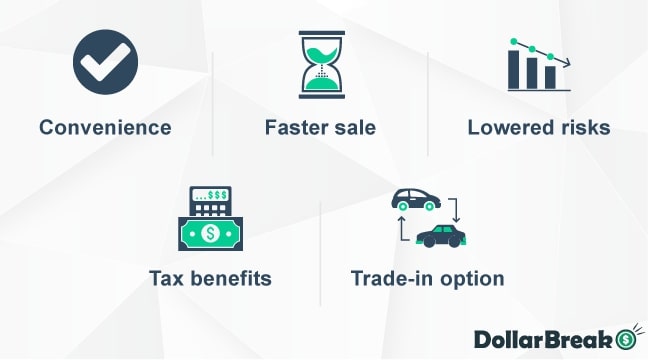
- Convenience: the dealer handles the paperwork for you.
- Speed: Kelley Blue Book puts a sale to a dealer at the same or next day, against one to three weeks on average for a private sale.
- Fewer risks: a reputable dealership takes away the scams that come with meeting strangers.
- Possible tax savings: only on a trade-in toward a car from the same dealer, and only in some states. Washington taxes the price after the trade-in is deducted, Michigan deducts up to $12,000 in 2026 and Florida only when it is part of the same sale. California and Virginia give no credit.
- One visit: if you are buying anyway, a trade-in sells the old car and buys the next one in the same deal.
Cons of Selling Car to Dealer
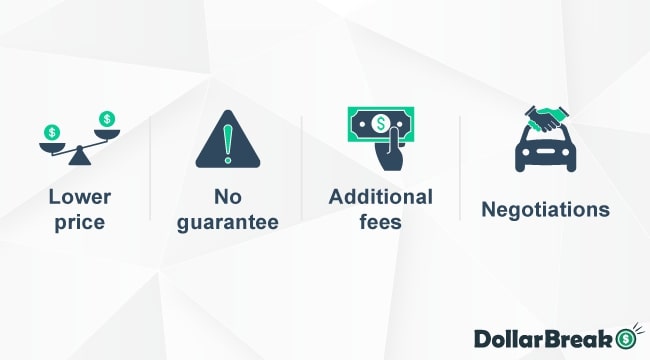
- Lower price: KBB's trade-in values sit below its private-party values, because the dealer has to recondition and resell the car.
- No offer at all: if your make, model or condition is in low demand, a dealer may pass on it.
- Offers that shrink: an online offer is only a starting point until a dealer inspects the car, and it may come down.
- Negotiation pressure: without preparation, you may accept less than the car is worth.
Bottom line: A dealer trades price for speed. Sell to one when a day matters more than the gap to a private sale, and always with a written offer in hand.
Worth doing
- You want the money within a day or two
- You are buying from the same dealer and your state credits the trade-in
- You hold a written offer for the dealer to beat
Skip
- You can wait one to three weeks for a private buyer
- The dealer wants to roll your negative equity into the new loan
- The dealer won't put its offer and the payoff in writing
How Much Can You Expect to Get?
A dealer's offer starts from your car's make, model, year, condition and mileage. Demand for that model and the wider market then move it up or down.
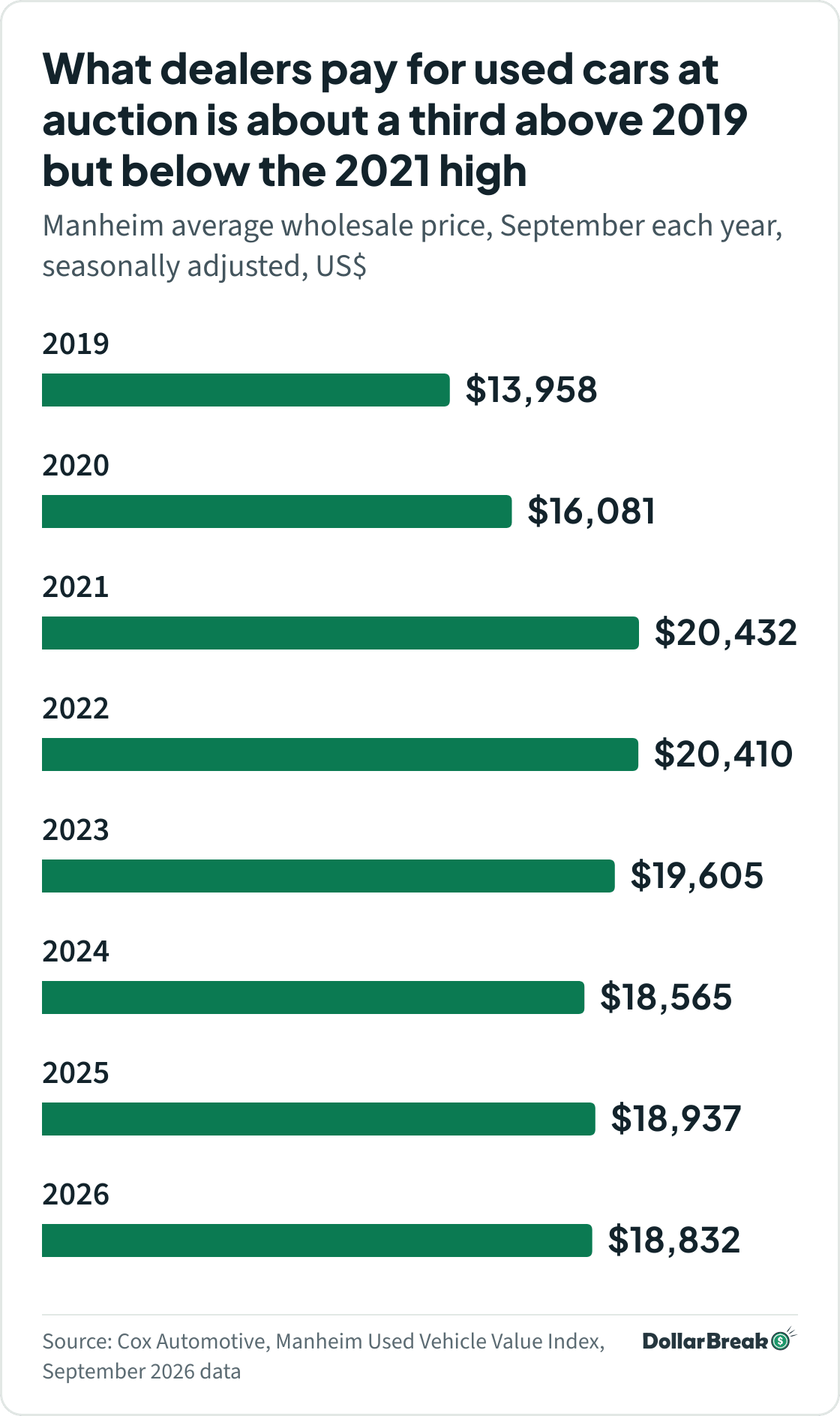
The market sets the ceiling. In September 2026, the average price dealers paid at wholesale auctions was $18,832, about 35% above September 2019's $13,958 but below the 2021 peak of $20,432. Cox Automotive's Manheim Used Vehicle Value Index stood at 205.9, down 0.6% on a year earlier.
For your own car, check Kelley Blue Book's car value calculator and Edmunds, then get quotes from several dealers. They will differ.
Treat a dealer's first offer as an opening number. Service records, wanted options, competing written offers and your own patience can all move it.
Tips for Selling a Car to Dealer
A few habits pay off at any dealer:
- Understand the trade-in: a generous trade-in figure means little if the next car's price rises to pay for it, so settle that price first.
- Know your bottom line: set the lowest offer you will take, and walk away below it.
- Get online offers too: Peddle, Wheelzy and CarBrain quote online and pick the car up for free, which gives you numbers to hold against the dealers'.
- Beware of upselling: if you are also buying, expect a push for warranties and add-ons. Buy only what you need.
Can I Sell a Car to a Dealer Without Buying a New One?
Yes. Dealers buy cars straight from owners as well as at auction, because they need a steady supply of used inventory. CarMax alone bought about 1.1 million vehicles from consumers and dealers in fiscal 2026, and it makes a written offer whether or not you buy from it (see CarMax vs a dealer's offer).
A straight sale is the simplest deal there is: the dealer handles the paperwork and pays you the agreed price.
Can I Sell a Financed Car to a Dealer?
Yes. The dealer pays off your loan as part of the deal, so the number that matters is your payoff amount against the car's value.
- Get the payoff amount: ask your lender what it takes to close the loan.
- Compare it with the car's value: use the valuation tools above or a dealer's written offer.
- Positive equity: the dealer pays off the loan and pays you the rest.
- Negative equity: you owe the difference. Rolling it into a new loan raises the amount borrowed, the term or the payment, so pay it in cash if you can.
- Confirm the payoff: call your lender about a week after the sale to check the loan is closed.
Negative equity is common again. Edmunds data show 29.6% of trade-ins toward a new vehicle were underwater in the second quarter of 2026, up from 14.7% in 2022, and the average amount owed on them was $6,884. To sell somewhere other than a dealer, see how to sell a financed car without paying it off.
Best Mileage to Sell a Car?
There is no magic number. Edmunds' data, cited by Progressive, show a car loses a little value with every 10,000 miles rather than dropping sharply at a milestone. Still, 100,000 miles is a psychological barrier for many buyers, and our guide to the best mileage to sell your car goes deeper.
Selling a Car to a Dealer FAQ
What happens when you sell your car to a dealership?
The dealer inspects the car, makes an offer and, once you agree, has you sign a bill of sale and hand over the title. If there is a loan, it pays the lender and pays you any equity left; the whole sale is usually done the same or next day.
Where is the fastest place to sell my car?
A dealer or an instant online offer. Kelley Blue Book puts a sale to a dealer at the same or next day, against one to three weeks on average for a private sale.
Who pays more, Carvana or CarMax?
In Consumer Reports' member survey, most members who sold to CarMax got about what they expected, while the majority who sold to Carvana got more than they expected. Get both offers for your own car; our Carvana vs CarMax comparison covers the differences.
Can I sell my car to a dealer for cash?
Yes: a straight sale needs no purchase, and CarMax makes a written offer whether or not you buy from it. How and when you are paid varies by dealer, so ask before you sign.
Do you pay less sales tax if you trade in your car?
In some states, and only on a trade-in toward a car from the same dealer. Washington taxes the price after the trade-in, Michigan deducts up to $12,000 in 2026, and California and Virginia give no credit.